
Banksia rose
Rosa banksiae W. T. Aiton
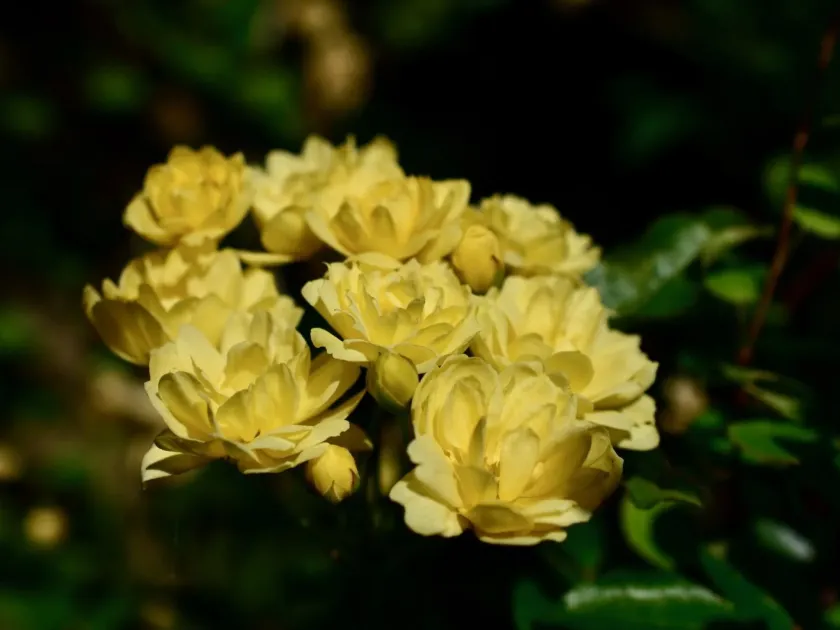
Description
Growing requirements
The Banksia rose (Rosa banksiae) is a vigorous, climbing shrub belonging to the Rosaceae family. Native to the mountainous regions of central and western China, this species is widely cultivated for its unique, thornless stems and profuse flowering.
It thrives in full sun and requires a sheltered location to protect it from harsh winds. Planting the rose against a south-facing wall is an ideal practice, as it provides the warmth necessary for vigorous growth and wood maturation.
The soil must be well-drained and fertile, preferably with a slightly acidic to neutral pH. Heavy, waterlogged soils should be amended with organic matter or grit to ensure optimal aeration for the root system.
As a climbing plant, it requires a sturdy support structure such as a pergola, trellis, or strong fence. Given its rapid growth rate, which can reach several meters in a single season, regular training of branches is essential.
Climatic adaptability is moderate; the plant is generally hardy in USDA zones 7-9. In colder climates, it is often grown in containers or as a protected specimen, as extreme frost can damage the semi-evergreen foliage.
Main diseases and pests
Powdery mildew is the most common fungal issue, particularly in humid conditions with poor air circulation. Maintaining adequate spacing and thinning out the canopy helps to significantly reduce the risk of infection.
Aphids can be a persistent problem, especially on new, succulent growth. Simple mechanical removal or the application of horticultural oils is usually effective in managing small to moderate populations during spring.
Black spot fungus may affect the foliage if the leaves remain wet for extended periods. Avoiding overhead irrigation and ensuring the plant remains dry during the evening is a key preventive cultural practice.
Spider mites can occur during hot, dry spells, causing leaf yellowing and stippling. Increasing humidity and washing the foliage with water are effective methods to discourage these pests from colonizing the shrub.
Root rot caused by Phytophthora species can occur in poorly drained soil. Strict adherence to proper irrigation schedules and ensuring the soil surface dries slightly between waterings are vital for plant health.