
Hanging rose
Rosa pendulina L.
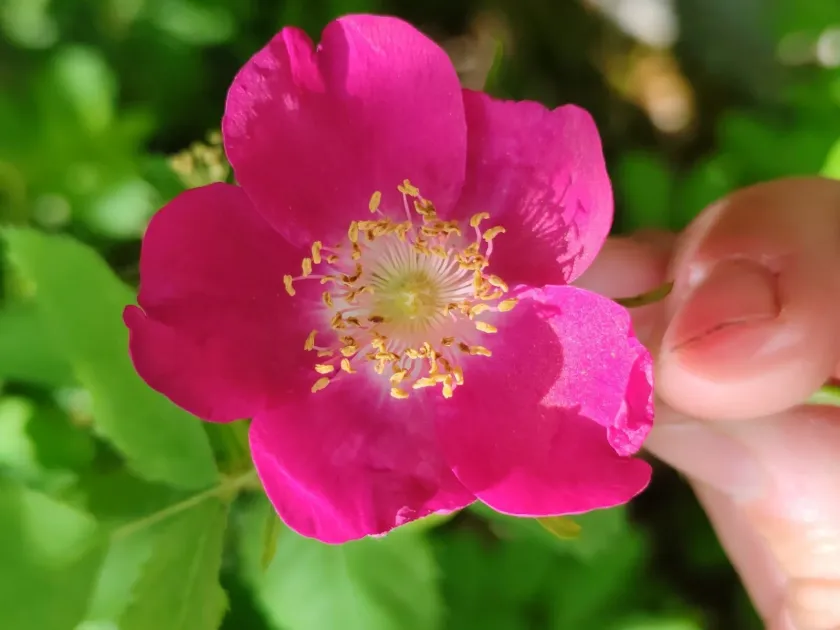
Description
Sowing dates
Sowing seeds of Rosa pendulina is best carried out in autumn, as they require a long period of stratification in natural conditions to break dormancy. Spring sowing often results in poor germination unless the seeds have been pre-treated in cold storage for several months.
Seeds should be sown at a depth of 1–2 cm in well-prepared, loose soil rich in organic matter. Maintaining consistent soil moisture during the germination period is critical, although waterlogging must be avoided to prevent seed rot.
Vegetative propagation via greenwood cuttings in June is an effective method to maintain clonal purity. Cuttings are treated with rooting hormones and placed in a greenhouse with high humidity to facilitate the development of the root system.
When establishing a plantation, a spacing of at least 2x2 meters is recommended. This provides sufficient room for each bush to develop a healthy canopy and allows for efficient maintenance and mechanical access if required.
Young seedlings require careful weeding during their first growing season to prevent competition for nutrients and water. Mulching the area around the base helps retain moisture and inhibits the growth of unwanted weeds, providing a more stable environment for development.
Growing requirements
Rosa pendulina, commonly known as the alpine rose or hanging rose, belongs to the Rosaceae family. It is naturally adapted to high-altitude mountain regions, typically growing on subalpine meadows and in scrublands where sunlight is abundant.
The plant thrives in full sun and requires excellent drainage, as it is highly sensitive to root asphyxiation caused by waterlogged soil. It is well-suited to regions with cool climates, showing exceptional cold hardiness compared to other rose species.
Soil requirements include a preference for slightly acidic to neutral, loamy, and nutrient-rich substrates. While it can survive in poorer conditions, regular amendments with compost or organic fertilizers significantly boost fruit production and general plant vigor.
Balanced mineral nutrition, specifically phosphorus and potassium, is essential for woody growth and fruit development. Nitrogen-based fertilizers should be applied with caution, primarily during the early stages of the growing season to promote leaf production.
Annual pruning is a cornerstone of Rosa pendulina cultivation. Removing old, unproductive, and diseased wood allows for better light penetration and air circulation throughout the canopy, which in turn reduces the risk of fungal infections.
Yield
The yield of Rosa pendulina generally reaches commercial levels by the 4th or 5th year of growth. The plant produces distinct, elongated to pear-shaped hips that are renowned for their high concentration of Vitamin C and secondary metabolites.
Individual healthy bushes can produce between 3 to 5 kilograms of fresh hips, provided they receive adequate care and irrigation. Regular monitoring during the flowering stage is important to ensure successful pollination by bees and other insects.
Beyond its value in the pharmaceutical industry, Rosa pendulina is prized for its decorative qualities. Its bright pink flowers followed by deep red, hanging fruits make it an attractive option for multifunctional agricultural projects.
Harvested hips are highly versatile and can be processed into syrups, jams, and extracts. The absence of heavy thorns on the stems compared to other wild roses makes it a more manageable crop for harvesting operations, significantly increasing labor efficiency.
Proper harvesting timing and post-harvest handling are essential to maximize yield quality. Berries should be picked once fully colored but still firm, as overripe fruits become soft and deteriorate quickly during transport and processing.
Main diseases and pests
Fungal diseases such as powdery mildew are common threats, especially in humid and poorly ventilated conditions. A white powdery coating on the leaves is a clear indicator that preventative measures, such as thinning the canopy, are necessary.
Rust is another significant disease that affects the foliage, characterized by orange pustules. Maintaining high sanitation standards, including the removal and destruction of fallen leaves in autumn, is crucial to minimize the spread of spores to next year's crop.
Common pests like aphids and leafrollers can infest the plant, feeding on young buds and shoots. While moderate infestations can be managed by biological controls, severe attacks may require targeted insecticidal treatments outside of the flowering period.
Spider mites are a particular concern in hot, dry weather. They thrive in drought-stressed environments, so ensuring the plant receives adequate water and occasional canopy misting can help prevent population explosions.
Robust plant health management through proper site selection and balanced feeding makes the rose more resilient to various threats. A proactive approach to monitoring ensures that small issues are addressed before they impact the total yield.
Harvesting
Harvesting should be completed when the rosehips have attained a deep red color and reached their physiological maturity. Picking should be done in dry weather, preferably in the morning, to ensure the produce is free from excess surface moisture.
The fruits must be handled gently to prevent bruising, which accelerates spoilage. Using breathable containers like wicker baskets or mesh crates is mandatory, as enclosed bags promote fermentation and rot within a few hours.
Immediate processing or drying is the most effective way to preserve the nutritional value of the harvest. Rosehips are typically dried at temperatures not exceeding 70°C to protect sensitive heat-labile vitamins like ascorbic acid.
Sorting by maturity is recommended during the harvest to ensure a uniform drying process. Inconsistent maturity levels can lead to uneven drying times, potentially resulting in mold growth within batches that are not fully dehydrated.
Stored dried hips should be kept in a cool, dry, and dark environment to maintain quality for up to two years. Protecting the stored goods from rodents and moisture is vital for the integrity of the end product in a commercial setting.