
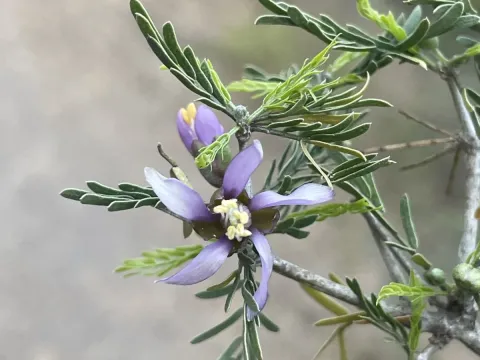
Porlieria
Porlieria
Porlieria is a genus of shrubs and small trees belonging to the Zygophyllaceae family. These plants are native to the arid and semi-arid regions of the Americas, ranging from the southern United States down through South America. They are well-known for their survival in desert-like conditions.
What the section contains

Porlieria
The ideal soil for Porlieria is well-drained, sandy, or rocky substrate. Proper drainage is the most critical factor for successful cultivation, as the plant is highly susceptible to root rot in waterlogged or heavy clay soils. They thrive in environments where water availability is infrequent.
Being a heliophilous plant, Porlieria requires full sun exposure to reach its physiological potential. Sufficient solar radiation is necessary not only for photosynthetic activity but also for the development of the characteristic dense, slow-growing wood that makes this genus economically valuable.
The plant exhibits xerophytic adaptations, including pinnate leaves that can fold during periods of extreme heat to minimize surface area and transpiration. Its deep root system allows the plant to anchor securely in rocky ground and access water reservoirs far beneath the surface layer.
Economically, Porlieria is prized for its extremely hard and durable wood, often associated with the trade name 'guaiacum'. This timber is highly resistant to decay and insects, making it suitable for specialized mechanical applications and fine woodworking. Additionally, parts of the plant are utilized in herbal traditions.
Root pathogens are the primary concern for Porlieria cultivation, particularly in nurseries where moisture management is difficult. Excess humidity in the soil environment quickly triggers the degradation of the root system, which can be fatal to the slow-growing specimen.
Pests such as mites and scale insects can affect the foliage, especially in confined planting conditions or greenhouses with poor air circulation. Regular inspection and maintaining appropriate spacing between plants are essential to mitigate the risk of infestation.
Competition from fast-growing weeds is a significant threat during the early years of development. Because Porlieria allocates most of its energy to deep root and dense wood development, it is initially slow to establish, requiring consistent weed control.
Preventative care involves regular monitoring of the foliage and stems. Pruning dead or diseased branches helps maintain the structural integrity of the tree and prevents the spread of pathogens throughout the dense canopy.
Chemical intervention should be used cautiously. Given the species' slow metabolic rate, standard concentrations of fungicides or pesticides might cause phytotoxicity; therefore, biological control agents are often preferred for long-term health maintenance.