
Yunnan shield fern
Polystichum yunnanense
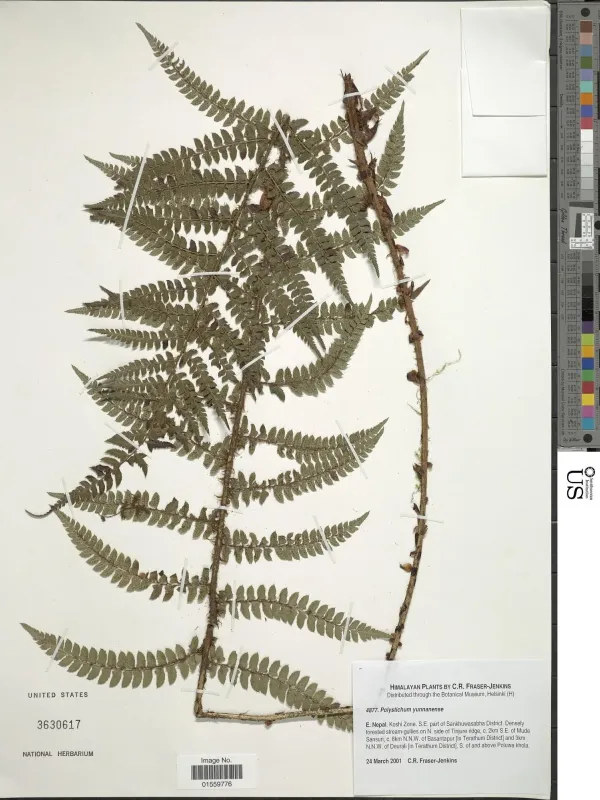
Description
Growing requirements
The Yunnan shield fern belongs to the Dryopteridaceae family, originating from the mountainous regions of Yunnan province, China. It is a highly appreciated ornamental fern that thrives in cool, shaded forest environments characterized by high humidity levels.
The plant requires well-draining, humus-rich soil that mimics a woodland floor. A slightly acidic to neutral pH level is ideal for healthy root development and sustained growth of the intricate fronds.
Water management is critical for this species. It demands consistent moisture throughout the growing season. While the soil should be kept moist, it must never be waterlogged, as stagnant water is detrimental to the plant's root health.
Environmental requirements include a sheltered position in the garden with partial to full shade. Direct exposure to intense sunlight should be strictly avoided as it can cause bleaching and scorching of the delicate foliage.
In terms of temperature, this fern prefers moderate climates. While it is hardy in many temperate regions, it benefits from a layer of organic mulch during winter to protect its roots from freezing temperatures and frost heaves.
Main diseases and pests
Root rot is the most significant threat to the Yunnan shield fern, typically caused by excessive irrigation or poor drainage. Improving the soil structure with sand or perlite can help mitigate this common issue.
Slugs and snails are the primary pests that damage the young, tender fronds during the spring growth phase. Implementing physical barriers or safe bait traps is often necessary to prevent significant leaf loss.
Spider mites and aphids may occasionally infest the plant, particularly if the surrounding air humidity is too low. Increasing ambient moisture through misting can serve as an effective preventative measure.
Leaf spot diseases can occur due to fungal pathogens in crowded or poorly ventilated conditions. It is essential to provide adequate spacing between plants to ensure good airflow and keep the foliage dry.
Good cultural practices, such as removing dead fronds at the end of the season and keeping the garden area clean, are vital for reducing the risk of recurring pest and disease problems.