
Braun's holly fern
Polystichum braunii
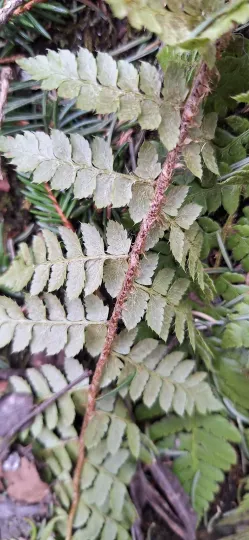
Description
Growing requirements
Braun's holly fern (Polystichum braunii) is a graceful perennial fern belonging to the Dryopteridaceae family. It is highly valued in horticulture for its elegant, arching fronds that form a symmetrical, vase-like crown.
Native to the cool, moist forests of the Northern Hemisphere, this fern has a wide natural distribution. It is exceptionally well-suited for temperate gardens where it can thrive in sheltered woodland-like conditions.
For optimal growth, this fern requires a location in full or partial shade. Exposure to direct midday sun should be strictly avoided to prevent scorching the delicate foliage and causing the plant to lose its vibrant green color.
The soil must be rich in organic matter, slightly acidic, and consistently moist, yet well-drained. Incorporating compost or leaf mold into the planting hole helps replicate the forest floor environment the plant naturally favors.
Care practices include consistent irrigation during dry spells and the application of mulch to keep the roots cool. The fern generally does not require heavy fertilization, as a healthy layer of organic mulch will provide sufficient nutrients.
Main diseases and pests
This species is generally robust and rarely suffers from severe diseases if site conditions are correct. However, waterlogged soil can lead to root rot, so ensuring proper drainage is the most critical preventative measure.
Slugs and snails can be problematic, particularly for young plants in early spring. These pests can leave significant holes in the fronds, so monitoring and the use of eco-friendly baits are recommended if damage is observed.
Occasional infestations of scale insects or mites may occur in low-humidity environments. Increasing air circulation around the plants and occasional misting can help deter these unwanted visitors effectively.
Maintenance involves cutting back old, tattered fronds in early spring before the new growth emerges. This ensures the plant remains tidy and allows the new croziers to develop without obstruction from old foliage.
During extreme winter conditions in colder regions, a layer of protective covering may be beneficial for younger specimens. In established colonies, the plants are usually hardy enough to withstand typical freezing temperatures without extra care.