
Woronow's shield fern
Polystichum woronowii
Description
Growing requirements
Woronow's shield fern (Polystichum woronowii) is a perennial herbaceous plant belonging to the Dryopteridaceae family. Naturally, it originates from the Caucasus region, where it thrives in moist, shaded forests and mountain slopes that provide a stable, humid microclimate.
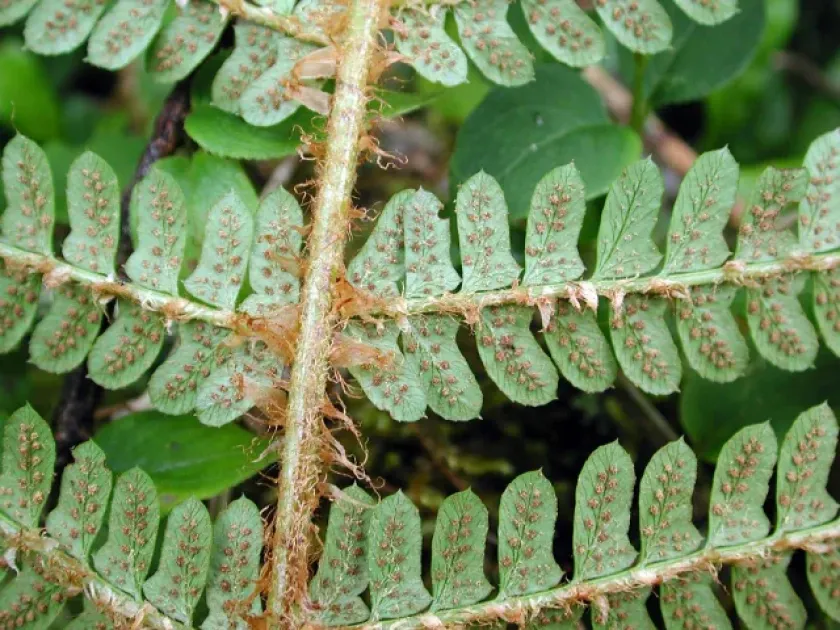
The culture is characterized by its evergreen, leathery fronds arranged in a dense, symmetrical rosette. The rhizome is sturdy and compact, which allows the plant to withstand harsh conditions during the dormant winter period effectively.
Successful cultivation requires a location in partial or deep shade, as direct sunlight can scorch the delicate foliage. The plant is highly sensitive to air humidity, necessitating regular watering and misting during dry or hot spells.
The soil should be loose, nutrient-rich, and well-draining to prevent root rot. An ideal planting medium consists of a forest-based substrate enriched with leaf mold and a small proportion of peat to maintain a slightly acidic soil pH.
The primary use of Woronow's shield fern is in ornamental landscaping. It is highly valued for its year-round structural foliage, its ability to brighten dark garden corners, and its aesthetic compatibility with other shade-loving plants like hostas or heucheras.
Main diseases and pests
The main threats to this fern species include fungal infections, which often occur due to waterlogged soil or stagnant air. Problems such as gray mold or leaf spot diseases can severely damage the foliage if not addressed promptly.
Regarding pests, slugs and snails pose the most significant risk by feeding on the tender young fronds. Additionally, in environments with low humidity, spider mites may infest the plant, causing discoloration and overall weakening of the specimen.