
Prickly shield fern
Polystichum vestitum
Description
Growing requirements
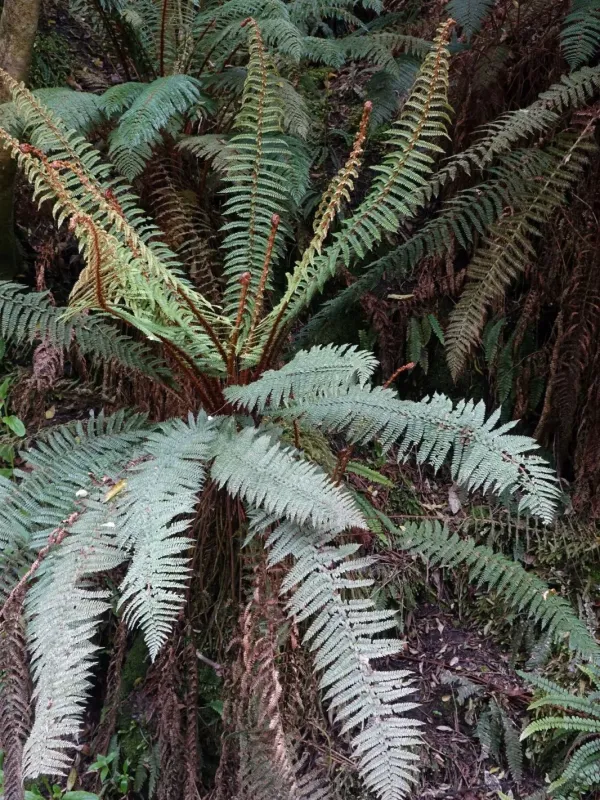
The prickly shield fern (Polystichum vestitum) is a robust, evergreen fern species belonging to the family Dryopteridaceae. This plant is native to the forests of New Zealand, where it thrives in cool, humid environments with a consistent water supply throughout the growing season.
To cultivate this species successfully, it is essential to provide a location in partial or full shade. Direct exposure to intense sunlight should be avoided at all costs, as the plant's fronds are sensitive to heat stress and excessive moisture loss in sunny conditions.
The soil should be rich in organic matter, well-draining, and kept consistently moist. A neutral to slightly acidic pH is ideal for the root development of the prickly shield fern. Adding leaf mold or compost to the planting site mimics the natural forest floor and supports the plant's nutritional needs.
Botanically, the plant is characterized by stiff, leathery fronds that form a distinctive, symmetrical rosette. The stipes (stalks) are covered in dense scales, which provide protection against cold and mechanical damage, reflecting the plant's adaptation to its native temperate climate.
In terms of usage, the prickly shield fern is highly regarded as an ornamental plant for landscaping. It is frequently employed in woodland gardens, rockeries, or as an understory component in shaded garden beds where year-round structure and texture are desired.
Main diseases and pests
Waterlogging remains the most significant threat to the health of this fern. Poorly drained soils promote root rot pathogens, which can rapidly deteriorate the plant's vascular system, leading to wilting and death of the foliage.
Pests such as scale insects or spider mites may occasionally infest the plant, particularly if it is grown in sheltered or overly dry conditions. Monitoring the underside of the fronds for signs of infestation and maintaining appropriate humidity levels are the primary defense strategies.