
Long-lobed holly fern
Polystichum neolobatum
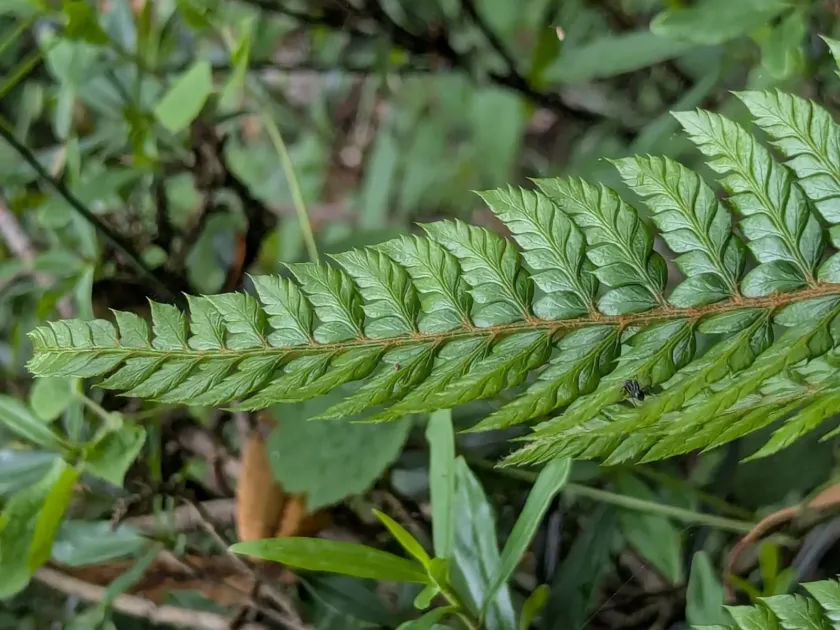
Description
Growing requirements
The long-lobed holly fern (Polystichum neolobatum) is a distinctive evergreen perennial belonging to the family Dryopteridaceae. Originating from the temperate forests of East Asia, it is highly valued for its striking architectural form and glossy foliage.
The plant features stiff, dark green, leathery fronds that grow in a symmetrical rosette. This species is unique for its ability to maintain a high level of ornamental value throughout most of the year, making it a staple in woodland and shaded garden designs.
Successful cultivation requires soil that is rich in organic matter and consistently moist but well-drained. The fern thrives in humus-heavy soil that mimics its natural forest floor habitat, preventing the roots from suffocating in stagnant water.
Light requirements are strict: Polystichum neolobatum prefers deep shade to partial shade. Exposure to direct afternoon sun should be strictly avoided to prevent scorching the delicate foliage and causing long-term physiological stress to the crown.
Climate adaptability is one of its strong suits, as the plant is hardy in many temperate zones. However, in regions prone to harsh, dry winter winds, applying a layer of organic mulch around the base is advisable to maintain soil temperature and moisture levels.
Main diseases and pests
While generally robust, the fern can suffer from fungal infections if soil drainage is inadequate. Root rot is the most common ailment, usually manifesting as a yellowing or wilting of the fronds, often caused by excessive irrigation or heavy soil types.
Pests such as slugs and snails are particularly problematic for young, emerging fronds during the spring growth flush. Implementing physical barriers or organic pest controls can help preserve the aesthetic integrity of the foliage during this vulnerable phase.
Spider mites can occasionally infest the plant, especially in drier environments with poor air circulation. Increasing humidity around the plant or applying specific miticides can mitigate these infestations effectively and quickly.
Maintenance and sanitation remain the best form of defense. Regularly removing dead or diseased fronds at the base of the plant reduces the humidity traps that harbor fungal pathogens and insect egg-laying sites.
Always ensure adequate spacing between plants to promote proper airflow. Good ventilation is essential for preventing the development of spores and mold, ensuring the long-term health and vigor of your holly fern collection.