
Northern holly fern
Polystichum lonchitis
Description
Growing requirements
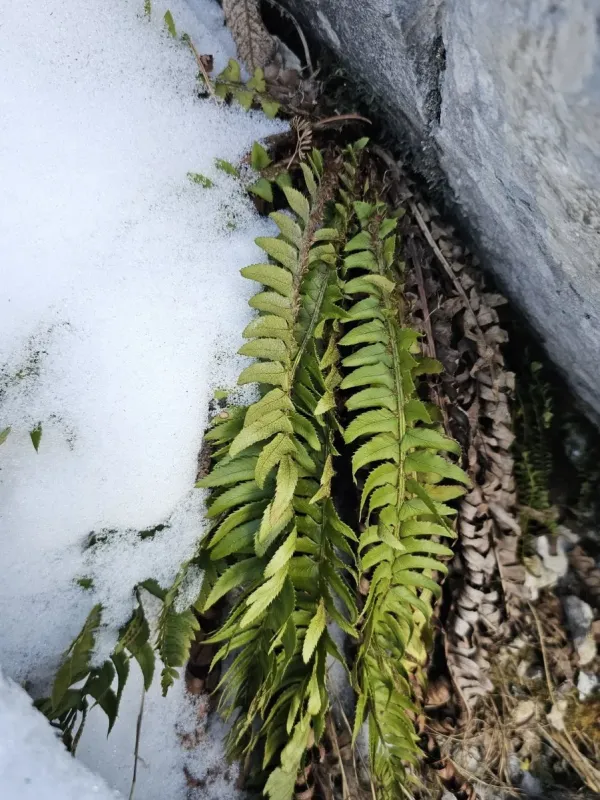
Northern holly fern (Polystichum lonchitis) is an evergreen perennial fern belonging to the Dryopteridaceae family. It is characterized by stiff, leathery, dark green fronds that are arranged in a basal rosette, providing year-round visual interest.
The natural range of this species covers mountainous regions of the Northern Hemisphere, where it thrives on rocky slopes, limestone crevices, and forested areas. This origin dictates its preference for well-drained, alkaline soils rich in minerals.
For successful cultivation, it is essential to provide a site with partial shade to full shade. Direct sunlight, especially during the afternoon, can cause leaf scorch and damage the plant's evergreen appearance during the growing season.
Cultural requirements include maintaining consistent soil moisture while ensuring excellent drainage. Avoid planting in low-lying areas where water might accumulate, as stagnant water is detrimental to the health of the rhizome and roots.
Horticulturally, it is utilized as an ornamental plant for rock gardens, shaded border designs, and woodland gardens. Its hardiness makes it a reliable choice for cold-climate gardeners looking for structural, evergreen foliage.
Main diseases and pests
The primary threats to Polystichum lonchitis are fungal pathogens such as root rot, which are triggered by waterlogged soil conditions and poor ventilation. Proper site selection is the best preventative measure against these diseases.
Pests such as spider mites and scale insects may occasionally infest the plant, particularly in dry environments. Monitoring the underside of the fronds is critical for early detection and manual removal of pests.
Slugs and snails can cause significant aesthetic damage to new frond growth in the spring. Implementing physical barriers, like gravel mulching around the base, helps protect the plant from these mollusks.
Cultural stress can weaken the plant's resistance, making it more susceptible to opportunistic infections. Maintaining clean garden practices, including the removal of dead or rotting plant debris, minimizes the risk of pathogen spread.
Chemical control should be used sparingly and only when necessary, as ferns can be sensitive to strong fertilizers and synthetic pesticides. Integrated pest management strategies are generally preferred for long-term health.