
Hooker's holly fern
Polystichum hookerianum
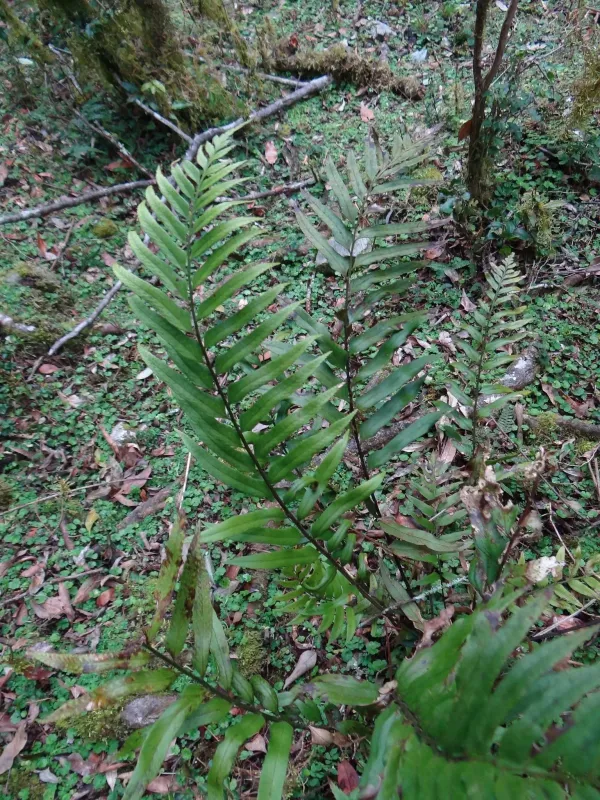
Description
Growing requirements
Hooker's holly fern, scientifically known as Polystichum hookerianum, is an elegant perennial plant belonging to the Dryopteridaceae family. It is primarily native to mountainous regions where it thrives in cool and moist microclimates.
The plant is highly valued for its dark green, leathery fronds that grow in a symmetrical, circular rosette. It is a slow-growing species, making it an excellent candidate for permanent placement in shaded border gardens or woodland collections.
This fern requires rich, well-draining soil with a high content of organic matter. It prefers a pH range that is slightly acidic to neutral, mirroring the forest floor environment where it naturally originates.
Exposure to direct sunlight is typically detrimental to this species, as it can cause leaf scorch. Providing a dappled shade or full shade location is essential for maintaining the deep color and health of the foliage throughout the year.
Consistent soil moisture is crucial for the success of Polystichum hookerianum. While the plant loves water, it must be planted in a medium that drains effectively to prevent the roots from rotting during dormant or cold periods.
Main diseases and pests
Root rot is the most significant threat to the health of Hooker's holly fern, usually resulting from overwatering or inadequate soil drainage. It is critical to keep the root zone damp but never waterlogged.
Slugs and snails represent the primary pest challenge, especially during the spring when new fronds begin to unfurl. Gardeners are advised to implement protective barriers or use organic baits to prevent foliage damage.
In environments with low humidity, spider mites may colonize the underside of the fronds. Maintaining ambient humidity and regular inspection can effectively mitigate this threat without the need for intensive chemical interventions.
Fungal infections can appear as spots or lesions on the fronds if the air circulation around the plant is restricted. Improving spacing between plants can prevent the spread of these pathogens.
By providing adequate mulch and avoiding excessive handling of the fronds, growers can maintain a robust plant that is more resilient to common environmental stresses and opportunistic pests.