
Polypogon viridis
Polypogon viridis
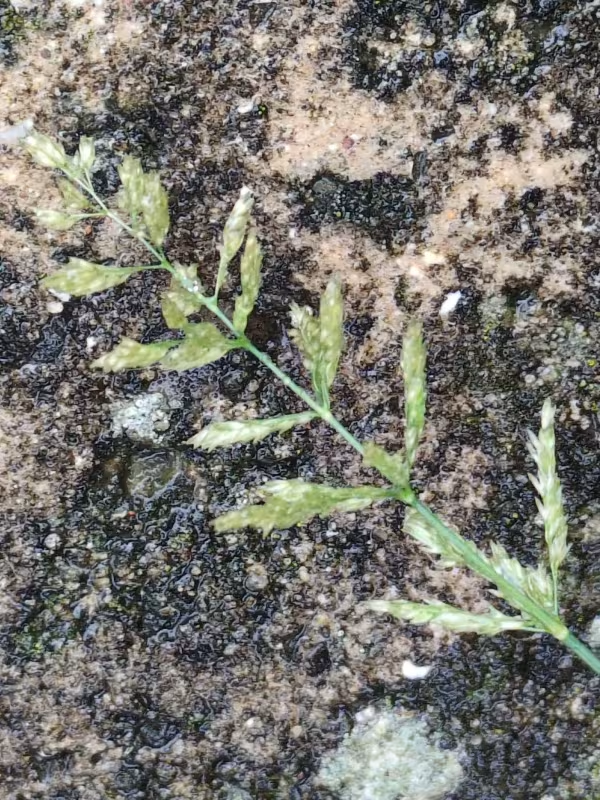
Description
Sowing dates
Polypogon viridis, commonly known as water bent, is a perennial grass species that belongs to the Poaceae family. It is often found in moist habitats, and when cultivated, it requires careful timing to ensure successful establishment. Early spring is considered the ideal time for sowing, allowing the plants to take advantage of soil moisture.
The seeds of Polypogon viridis are very small, necessitating a fine, firm seedbed. Soil preparation should include leveling and light rolling to ensure that seeds are not buried too deeply. A depth of no more than 1 to 1.5 centimeters is critical for germination.
Precise seed distribution is essential for creating a uniform stand. Because the grass has a strong capacity for tillering, growers should avoid overly high seeding rates to prevent overcrowding and resource competition among individual plants.
During the germination phase, consistent moisture is mandatory. If the weather is dry, supplemental irrigation might be necessary to ensure that the small seeds do not dry out before they can establish a viable root system.
In regions with mild winters, autumn sowing is also a viable option. However, in colder climates, it is safer to stick to spring planting to avoid the risk of frost heaving, which can damage young, shallow-rooted seedlings.
Growing requirements
Polypogon viridis thrives in conditions that many other grasses cannot tolerate. Its natural preference is for wet, marshy areas, stream banks, and low-lying fields where soil aeration is low and moisture levels remain consistently high throughout the growing season.
The ideal soil profile is fertile, silty, or clay-based, rich in organic matter. This species is highly adapted to these environments and can even withstand periodic flooding, making it an excellent choice for reclamation projects in poorly drained agricultural zones.
Regarding light requirements, the plant is quite versatile. While it performs best in full sun, it shows good shade tolerance, allowing it to grow effectively in mixed environments or along the edges of wooded areas in a pasture setting.
Nutrient requirements are moderate. The grass responds positively to nitrogen applications, which boost vegetative growth. However, excessive chemical fertilization should be balanced with phosphorus and potassium to maintain the structural integrity of the stems.
Environmental plasticity is one of the key strengths of this species. It is well-suited for temperate climates and can quickly adapt to changing environmental conditions as long as the critical requirement for moisture is met.
Yield
The forage yield of Polypogon viridis is highly dependent on environmental factors, particularly water availability. In high-moisture conditions, the plant can produce a dense, high-quality biomass that provides a significant amount of fodder for livestock.
The plant is valued for its high leaf-to-stem ratio during the vegetative phase. Livestock find the grass highly palatable when harvested before the onset of lignification, making it a reliable source of quality forage during the spring and summer months.
In managed pastures, the species demonstrates excellent regrowth capacity. After being grazed or mowed, it regenerates quickly, allowing for multiple utilization cycles per season if the management plan is properly implemented.
When used for hay production, Polypogon viridis provides a nutrient-rich feed that is easy to store and transport. Its chemical composition remains favorable for animal nutrition provided the harvest is timed correctly.
Overall productivity can be quite impressive on soils that are deemed unsuitable for traditional cereal grains, making this species a smart choice for optimizing low-yield or marginal wet agricultural land.
Main diseases and pests
Disease pressure on Polypogon viridis typically increases in stagnant, humid air, especially when combined with high temperatures. Fungal pathogens such as rusts and powdery mildew are the most common threats to the health of the leaves.
Insect pests, including cereal flies and leafhoppers, can cause damage to the apical meristems of young plants. Monitoring the crop for early signs of infestation is crucial to preventing localized outbreaks that could impact overall stand density.
Overgrazing is a significant risk factor. When the grass is grazed too short consistently, the plant’s energy reserves stored in the roots become depleted, leading to a reduced ability to recover and potential long-term damage to the pasture.
Weed competition is most problematic during the establishment phase. Using high-quality seed and ensuring that the field is well-prepared can significantly reduce the pressure from competing broadleaf weeds.
Effective management includes regular monitoring and the use of integrated pest management strategies. Ensuring proper airflow through the canopy by balancing the density of the stand also serves as a preventive measure against fungal outbreaks.
Harvesting
The optimal harvest window for Polypogon viridis is when the plant reaches the heading phase. Harvesting at this stage ensures the best balance between digestible protein content and structural fiber, resulting in high-quality hay.
Mechanical harvesting should be carried out during dry weather periods. Modern equipment, such as disc mowers equipped with conditioners, is highly recommended to improve the drying rate of the cut material.
Tedding the mowed forage is necessary to ensure uniform moisture loss and prevent mold development during storage. The grass should be turned several times to guarantee that the lower layers of the swath dry effectively.
For seed production, the harvest must be timed precisely to the wax-ripeness stage. Given that the seeds are small and prone to shattering, prompt harvesting or the use of specific attachments on combine harvesters is required.
Post-harvest management involves lightly harrowing the field to stimulate dormant buds and encourage healthy growth for the following season. This simple practice ensures the longevity and productivity of the perennial stand.