
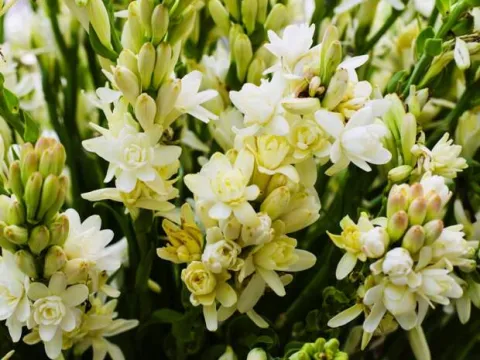
Polianthes
Polianthes L.
Polianthes (Polianthes L.), commonly known as Tuberose, belongs to the Asparagaceae family. This perennial tuberous plant is widely recognized for its intense fragrance and its significance in the global perfume industry.
What the section contains

Polianthes
Planting in open fields should only commence when soil temperatures consistently reach 15–18 degrees Celsius. Tuberose is a frost-sensitive plant that requires a warm, stable climate for successful initial rooting and growth.
In regions with shorter growing seasons, it is common practice to pre-sprout bulbs in pots indoors. This strategy helps to ensure that the plant completes its flowering cycle before the arrival of autumn chill.
Bulbs are typically planted at a depth of 3–5 centimeters, depending on the bulb size and soil structure. Proper spacing is essential to ensure adequate airflow, which is critical in preventing moisture-related plant diseases.
Propagation is primarily achieved through the separation of offsets or bulblets from the parent bulb. This is usually carried out during the harvesting phase in autumn, preparing the stock for the following season.
Polianthes thrives in sunny, warm locations with protection from strong winds. To achieve optimal flowering, the plant requires a long growing season with consistent temperatures between 20 and 25 degrees Celsius.
The soil must be fertile, well-draining, and rich in organic matter. Sandy loams are considered ideal; heavy, waterlogged soils are detrimental as they significantly increase the risk of tuber rot.
Regular irrigation is necessary throughout the active growth phase, particularly during the formation of the floral spike. However, it is vital to avoid standing water, as the bulbs are highly susceptible to fungal decay.
Fertilization regimes should prioritize phosphorus and potassium to encourage robust bloom production. Nitrogen applications should be managed carefully to avoid excessive leafy growth at the expense of floral development.
Consistent weeding and surface cultivation are important maintenance practices. Keeping the area free of weeds reduces competition for nutrients and limits the habitat for common garden pests.
The primary economic use of Polianthes is the extraction of essential oil, which is a prized ingredient in luxury perfumery. The complex scent profile makes it a high-value niche agricultural product.
Flower yield is heavily influenced by planting density, nutrition, and the quality of the starting bulb stock. Professional farmers focus on optimizing the harvest window to maximize the oil content in the petals.
For floricultural purposes, breeders look for characteristics such as stem strength and bud count. Long-stemmed varieties are in high demand for the cut flower market, where freshness and shelf life are key metrics.
The multiplication rate of the bulbs allows for sustainable production cycles. Farmers can easily replenish their fields using the bulblets generated during each season, maintaining long-term profitability.
Efficiency in harvesting and immediate post-harvest processing is crucial. Because the fragrance compounds are volatile, the time elapsed between collection and processing directly impacts the final product's quality.
Fungal diseases are the most significant threat to Polianthes, particularly botrytis and fusarium. These thrive in humid conditions and often originate from poor drainage or improper handling of the bulbs.
Aphids and spider mites are common pests that feed on the foliage and flower spikes. These pests not only physically damage the plants but also serve as vectors for viruses that can stunt growth.
Nematodes are another persistent issue, often causing root decay and overall plant decline. Soil management, including proper crop rotation, is essential to mitigate these subterranean threats.
Proactive disease management involves treating bulbs with fungicides before planting and ensuring that the planting site is well-drained. Promptly removing and destroying any infected plant tissue is mandatory to prevent spread.
Integrated Pest Management (IPM) strategies, which include monitoring and biological control, are recommended for large-scale operations. This approach helps maintain plant health while minimizing reliance on harsh chemicals.
Harvesting for the cut flower market occurs when the lower buds on the spike begin to open. This stage ensures that the flower will continue to develop while providing the best longevity for consumers.
For essential oil production, flowers are harvested at the peak of their fragrance, often early in the morning. Rapid transport to the processing facility is necessary to preserve the delicate aromatic compounds.
In autumn, as the foliage yellows, the bulbs are carefully lifted from the ground. Using appropriate tools prevents bruising, as damaged tissues are highly vulnerable to post-harvest storage diseases.
After harvesting, bulbs must be thoroughly cleaned and cured in a warm, ventilated space for several weeks. This curing process allows the outer layers to dry and harden, which is crucial for successful dormancy.
During the winter storage period, bulbs should be kept in a cool, dry environment with good air circulation. Maintaining temperatures around 10–15 degrees Celsius prevents premature sprouting and fungal growth.