
Polianthes tuberosa
Polianthes tuberosa L.
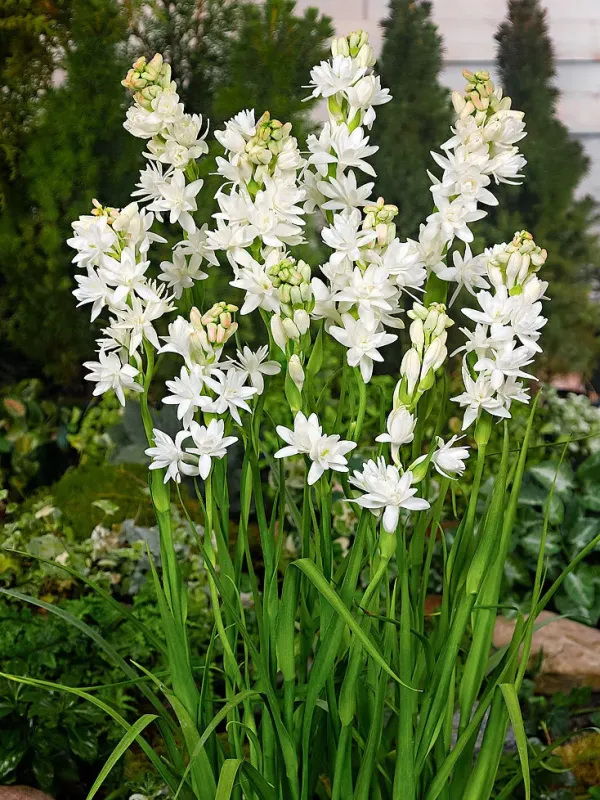
Description
Sowing dates
Polianthes tuberosa, commonly known as tuberose, is a perennial bulbous plant belonging to the Asparagaceae family. While it is native to Mexico, it has been cultivated globally both as an ornamental plant and as a commercial source of essential oils for the perfume industry.
The planting process begins when soil temperatures consistently reach +15°C to +18°C. In regions with cold winters, bulbs must be planted in the spring after the danger of frost has passed, ensuring they have the full growing season to complete their life cycle.
Proper bulb preparation is essential for successful growth. Healthy, firm bulbs should be cleaned of old roots and scales before planting. Selecting the appropriate bulb size is crucial, as only mature bulbs are capable of producing a flowering stalk during the current season.
The planting depth should be roughly 3–5 cm above the bulb's top, depending on the soil texture. In lighter soils, deeper planting is acceptable, whereas, in heavier, denser soils, keeping the bulbs slightly higher helps prevent rot and improves emergence.
For commercial cultivation, spacing is usually set at 20–25 cm between plants and 40–50 cm between rows. This spacing density allows for adequate light penetration and airflow, which are critical for preventing fungal diseases and ensuring healthy foliage development.
Growing requirements
Tuberose is a highly thermophilic crop that thrives in temperatures between +20°C and +25°C. It requires a long, warm growing season to produce high-quality flower spikes, and any exposure to temperatures below +10°C will significantly stunt its growth.
Well-drained, fertile soil is a non-negotiable requirement. Tuberose prefers sandy loams or loamy soils rich in organic matter. Good drainage is vital, as stagnant water is the primary cause of bulb decay, which can quickly wipe out entire plantings.
Irrigation must be consistent throughout the vegetative stage. While the plants require ample moisture to grow, waterlogging should be avoided at all costs. Drip irrigation is often preferred in commercial settings to keep the foliage and flowers dry, thereby reducing disease risk.
Nutrient management involves a balanced application of fertilizers. A nitrogen-rich fertilizer is used early in the growth stage to promote vegetative development, while a shift to phosphorus and potassium-rich formulas during the budding stage enhances flower quality and bulb storage potential.
Site selection should prioritize full sun exposure. In shaded environments, the flower stalks become weak and elongated, and the overall yield of both cut flowers and essential oils decreases significantly. Wind protection is also recommended to prevent physical damage to the tall stalks.
Main diseases and pests
Fungal diseases are the most prevalent threats to P. tuberosa. Grey mold (Botrytis) and Fusarium wilt are particularly dangerous, often triggered by excessive soil moisture or poor aeration. Infected bulbs show soft spots and discoloration, requiring immediate removal from the field.
Pests such as spider mites and thrips are common in dry, hot weather. They pierce the leaf tissues and feed on sap, leading to chlorosis, leaf curling, and overall plant weakening. Severe infestations can significantly reduce the photosynthetic capacity of the plants.
Nematodes represent a more insidious problem as they attack the root system, causing root-knot galls. Infested plants show stunted growth and low flower production. Prevention is critical, as there are few effective remedial treatments once the soil is contaminated.
Integrated Pest Management (IPM) is highly recommended. This includes using certified disease-free planting material, disinfecting bulbs before storage, and practicing crop rotation to prevent the buildup of soil-borne pathogens in the production field.
Regular monitoring of the plantation is essential for early detection of issues. Applying appropriate fungicides and insecticides at the first signs of stress can save the crop, provided the substances are used according to safety regulations and resistance management guidelines.
Harvesting
The harvest strategy depends on the intended use. For the floriculture market, flower spikes are cut when the first one or two florets open. This ensures the best shelf life and allows for the remaining buds to open gradually when placed in a vase.
For the essential oil industry, harvesting is more precise. Flowers must be picked at the peak of their fragrance, typically early in the morning, to ensure the maximum concentration of natural oils before the sun evaporates them.
Bulb harvesting takes place after the foliage turns yellow in late autumn, marking the end of the growth cycle. The bulbs should be lifted carefully to avoid mechanical injury, as any cut or bruise provides an entry point for secondary infections during storage.
Post-harvest handling involves drying the bulbs in a well-ventilated, shaded area for several weeks. Once the outer skins are dry and the old roots are removed, the bulbs are sorted and stored in a cool, dry place at temperatures ranging from +10°C to +15°C.
The final product—tuberose oil—is a highly valued ingredient in the luxury fragrance industry. Due to the labor-intensive nature of harvesting and extraction, this crop remains a high-value niche product for agricultural producers worldwide.