
Sea Teak
Podocarpus polystachyus
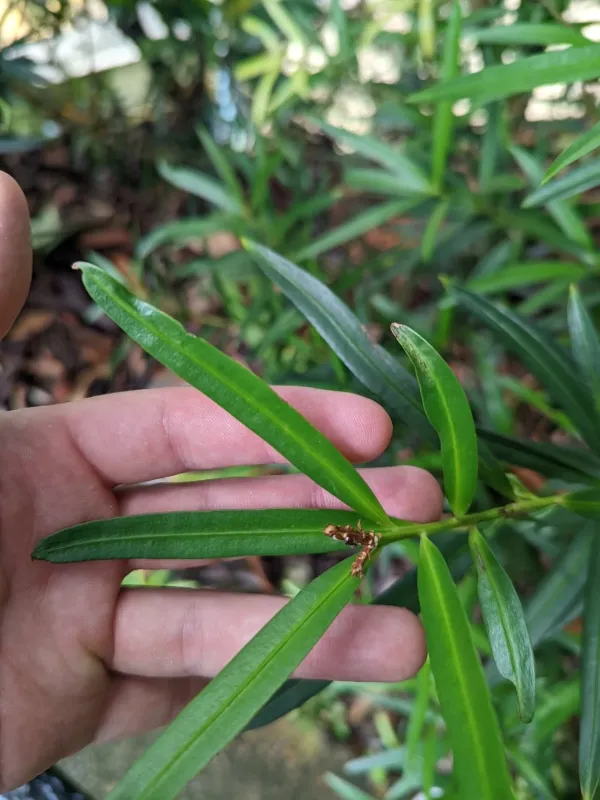
Description
Growing requirements
Sea Teak (Podocarpus polystachyus), a member of the Podocarpaceae family, is a versatile evergreen conifer native to the tropical coastal regions of Southeast Asia. This species is highly valued for its durable wood and its ability to thrive in humid tropical ecosystems.
The culture requires a tropical climate with minimal temperature fluctuations. It is intolerant to frost and thrives best in environments where temperatures remain consistently above 15 degrees Celsius. Humidity is a key environmental factor that promotes healthy needle development.
Soil requirements focus on well-drained, sandy to loamy substrates. Podocarpus polystachyus is remarkably salt-tolerant, often found growing near mangroves, which makes it a suitable species for coastal reforestation projects and agroforestry in maritime zones.
Agricultural practices for this crop include consistent irrigation during the establishment phase and a steady supply of micronutrients. While the tree grows relatively slowly, proper soil fertility management can significantly enhance its annual increment and wood quality.
Sunlight exposure is crucial for the structural development of the tree. While young specimens adapt to filtered light, mature Sea Teak trees reach their optimal growth potential under full sun conditions, which also helps in developing a dense, healthy canopy.
Main diseases and pests
Root rot, primarily caused by waterlogged conditions, remains the most significant threat to Podocarpus polystachyus. Ensuring proper soil drainage is the most effective preventative measure against fungal pathogens that target the root zone.
Pests such as scale insects and mealybugs can infest the branches and needles, particularly in high-density nurseries. Early detection through regular crop scouting is essential for preventing localized outbreaks from spreading across the site.
Leaf-eating caterpillars may occasionally damage the foliage, reducing the photosynthetic capacity of the tree. In controlled environments, biological control methods or targeted insecticidal applications are often employed to manage such infestations.
Nutrient deficiency, often manifested as chlorosis or stunted growth, can make the trees more susceptible to opportunistic diseases. Maintaining an optimal pH level and nutrient balance is fundamental to overall plant vigor and pest resistance.
Physical injuries to the bark and stems, often caused by maintenance equipment or severe weather, can serve as entry points for pathogens. Maintaining a clean and orderly work environment significantly reduces the risk of such structural damage.
Harvesting
The harvesting of Sea Teak is primarily focused on timber production. Given its slow-growing nature, the rotation period for sustainable timber yield is typically long, often spanning several decades to achieve the desired wood density and heartwood development.
Selective harvesting is the recommended method to maintain the ecological balance of the plantation. Only mature trees that have reached their economic maturity should be selected, ensuring that younger cohorts remain protected to sustain future production cycles.
Post-harvest management involves careful drying of the timber. Sea Teak wood is known for being easy to work with, resistant to decay, and dimensionally stable, which makes it a preferred choice for high-quality joinery and boat building.
During the harvest process, it is essential to minimize damage to the remaining stand. Proper logging techniques prevent soil compaction and root damage to adjacent trees, which is critical for long-term plantation health.
Sustainability certifications are becoming increasingly important for the commercial marketing of this timber. Adhering to international standards during harvest ensures access to premium markets and supports the conservation of the species.