
Breede River Yellowwood
Podocarpus elongatus
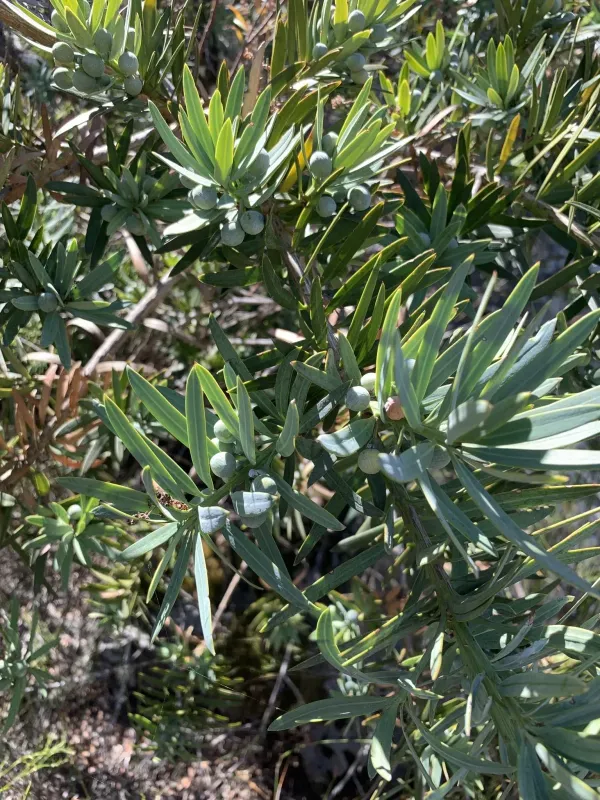
Description
Growing requirements
The Breede River Yellowwood (Podocarpus elongatus) belongs to the Podocarpaceae family. It is a slow-growing evergreen tree or shrub, highly valued for its elegant, willow-like foliage and sculptural appearance in gardens.
Native to the Western Cape of South Africa, this species naturally occurs in riparian zones and rocky mountain gorges. Its evolutionary adaptation to these habitats makes it a resilient choice for various temperate garden environments.
In terms of cultivation, this species thrives in well-drained, nutrient-rich soils. It requires consistent moisture, especially in the early stages of establishment, but established specimens are somewhat tolerant of periods of dryness.
Regarding climate, the plant prefers sunny to semi-shaded positions. It is sensitive to severe frost, so in colder regions, it is advisable to plant it in sheltered locations or keep it in pots that can be moved indoors during extreme winter conditions.
Horticulturally, it is utilized as an ornamental specimen, a screen, or a subject for bonsai. Its timber, historically known for its quality, is durable and fine-grained, although modern usage focuses primarily on its landscape value.
Main diseases and pests
Common pests associated with this species include scale insects and spider mites, particularly in environments with poor air circulation. Regular inspection and targeted application of horticultural oils or systemic insecticides are effective for control.
Root rot is a critical threat that usually occurs due to waterlogged soil conditions. Ensuring excellent drainage and avoiding over-irrigation are the best preventive measures to maintain the health of the plant's root system over time.