
Podocarpus drouynianus
Podocarpus drouynianus
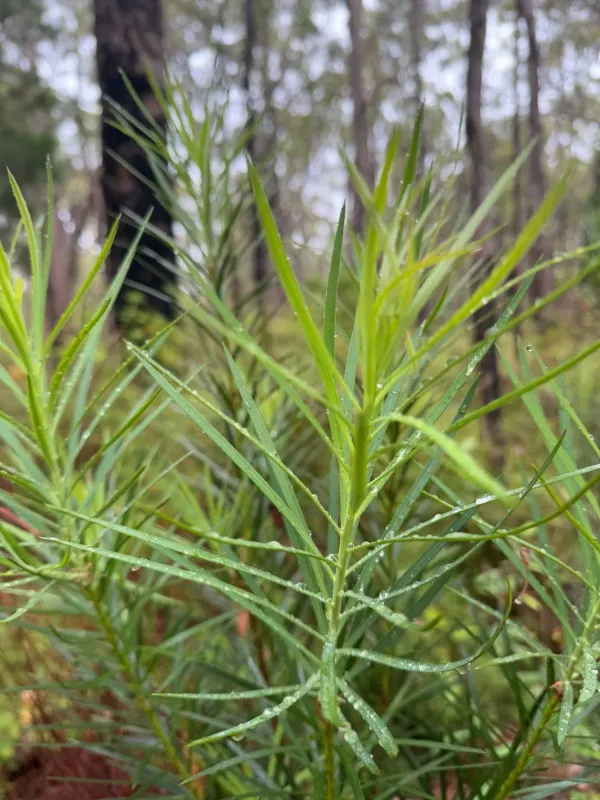
Description
Growing requirements
Podocarpus drouynianus is an evergreen shrub belonging to the Podocarpaceae family. It is native to the southwestern regions of Western Australia, where it thrives in diverse ecological niches.
The plant requires well-drained soil to prevent root issues, as it is native to regions with sandy or loamy textures. Consistent soil moisture is necessary, but the soil should never become waterlogged.
Regarding light conditions, the species performs best in partial shade to dappled sunlight. While it can withstand periods of direct sun, protecting it from harsh afternoon heat prevents foliage scorch.
Climatic requirements are specific; it prefers mild, temperate conditions. In areas with frost, cultivation should be restricted to greenhouses or protected containers to ensure the plant's long-term survival.
This species is highly valued for its ornamental quality and compact growth habit. It is frequently employed in landscaping as a specimen plant, a backdrop in garden beds, or as part of a managed hedge.
Main diseases and pests
The primary threat to the health of the plant is root rot, typically caused by poor drainage or overwatering. Maintaining a porous soil structure is the most effective preventative measure for this species.
Pests such as scale insects and spider mites may become problematic, especially in low-humidity environments. Regular foliage inspection is essential for early detection and mitigation of these infestations.
Fungal infections, including leaf spot, may occur if the plant is kept in an area with stagnant, humid air. Increasing airflow around the shrub significantly reduces the likelihood of these pathogens spreading.
Nutrient toxicity can manifest if fertilizers are applied in excess, potentially leading to foliage browning. Using slow-release, balanced fertilizers is recommended to provide consistent nutrients throughout the growing season.
Pruning should be performed with sterilized tools to prevent the transmission of infections between plants. Maintaining general plant hygiene by removing dead or decaying foliage is a vital part of its care regimen.