
Podocarpus ledermannii
Podocarpus ledermannii
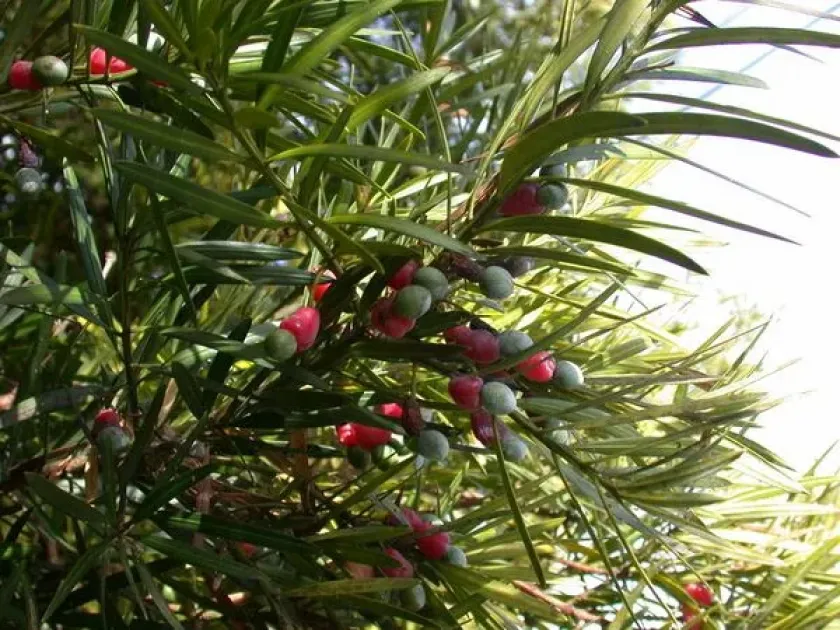
Description
Growing requirements
Podocarpus ledermannii is an evergreen coniferous species belonging to the Podocarpaceae family. It is native to the high-altitude tropical rainforests, with its primary distribution centered in the mountainous regions of New Guinea.
The species requires a stable tropical climate characterized by consistently high humidity and moderate temperatures. It is not frost-tolerant and thrives best in environments that mimic its natural habitat, typically between 1500 and 2500 meters above sea level.
Regarding soil requirements, this tree demands well-drained, nutrient-rich substrates with a slightly acidic to neutral pH. Proper soil aeration is critical, as the root system is susceptible to decay if exposed to waterlogged or compacted conditions.
Botanically, the tree is distinguished by its leathery, lanceolate leaves and the development of specialized fleshy structures, known as receptacles, which support the seed. These structures are distinct from traditional cones found in other conifers.
Cultivation practices involve maintaining high ambient humidity levels and providing partial shade, especially during the initial stages of growth. The tree exhibits a slow to moderate growth rate, which requires patience when establishing it in landscaping or forestry projects.
Harvesting
The economic utility of Podocarpus ledermannii is primarily concentrated in specialized botanical collections and forest restoration efforts. Harvesting its seeds for reproduction requires careful monitoring of the maturation cycle to ensure viability for propagation.