
Podocarpus lambertii
Podocarpus lambertii
Description
Growing requirements
Podocarpus lambertii is an evergreen coniferous tree belonging to the family Podocarpaceae. Native to the subtropical forests of South America, specifically Brazil, this species thrives in humid environments where forest canopy provides protection and stability to the local ecosystem.
This crop requires fertile, well-drained soils to reach its full growth potential. It is highly sensitive to extreme frost, making it suitable primarily for subtropical and warm-temperate climates. Consistent moisture is essential, especially during the early stages of establishment.
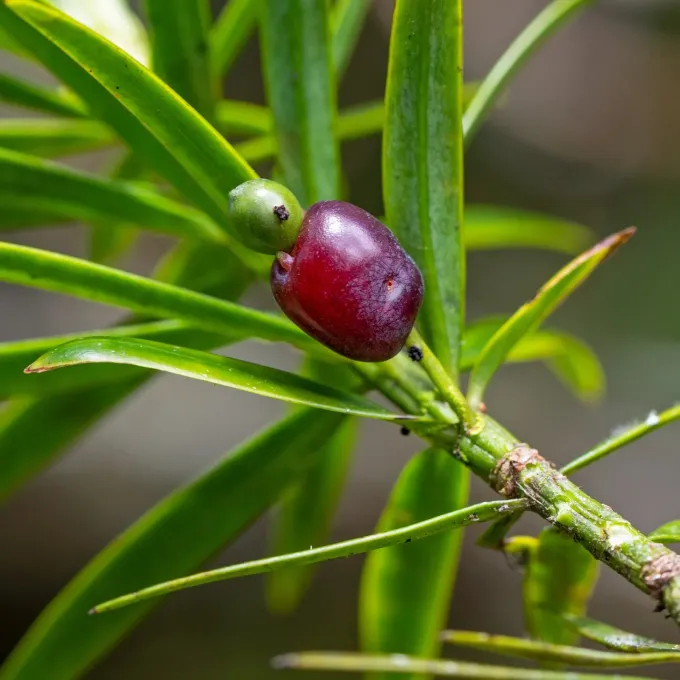
The botanical structure of Podocarpus lambertii is characterized by dense, leathery, lanceolate leaves and a slow-growing habit. A key biological feature is the development of a fleshy epimatium covering the seeds, which differs significantly from the cones found in temperate conifers.
In terms of economic use, the timber of Podocarpus lambertii is highly valued for its fine texture, strength, and durability. It is frequently employed in fine woodworking, furniture making, and high-end cabinetry, reflecting its importance in local silviculture.
Agricultural management involves careful selection of planting sites with adequate light exposure, though young specimens benefit from partial shade. Maintaining soil health and implementing proper irrigation practices are vital to prevent physiological stress and ensure long-term vitality.
Main diseases and pests
Root rot pathogens represent the primary disease threat for Podocarpus lambertii, often triggered by waterlogged soil conditions. Proper site preparation and the installation of effective drainage systems are necessary to prevent these destructive fungal infections.
Common pests include scale insects and mealybugs that congregate on the foliage. These insects weaken the tree by extracting phloem sap, leading to stunted growth. Integrated pest management strategies, including the use of targeted insecticides, are recommended to control infestations.