
Henkel's yellowwood
Podocarpus henkelii
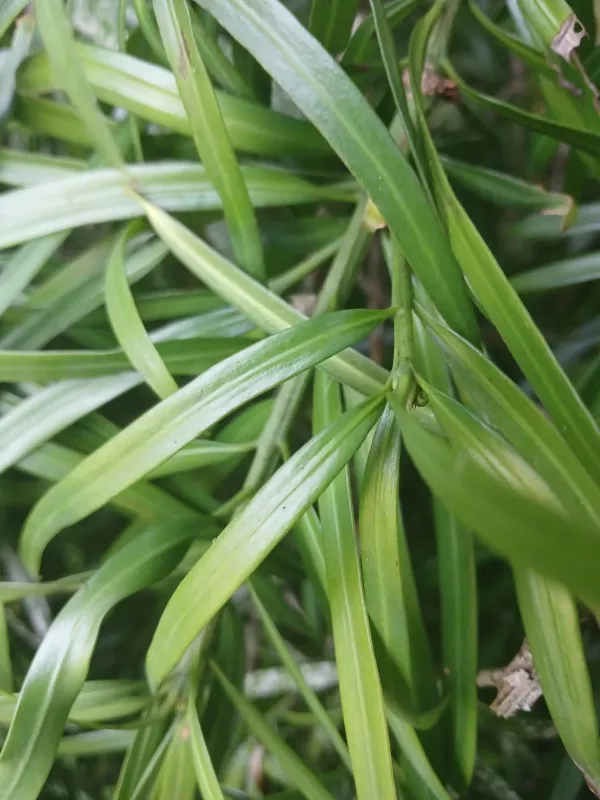
Description
Growing requirements
Henkel's yellowwood (Podocarpus henkelii) is a magnificent evergreen conifer belonging to the Podocarpaceae family. It is native to the mist-belt forests of South Africa, where it thrives in humid and shaded conditions.
This species is highly valued in horticulture for its long, drooping, dark green leaves that give it a distinctive appearance. It requires a stable environment with consistent moisture levels to mimic its natural habitat.
When cultivating this tree, soil quality is paramount. It performs best in well-draining, nutrient-rich, acidic to neutral soil. Improving the soil structure with organic compost before planting provides the necessary foundation for growth.
Regarding climate, the plant is relatively frost-sensitive and should be sheltered from harsh winter winds. In regions with freezing temperatures, it is typically grown in pots that can be relocated to a conservatory or greenhouse.
Regular maintenance includes light pruning to shape the canopy and the removal of competing weeds around the base. It is a slow-growing tree, which makes it an excellent candidate for long-term ornamental garden projects.
Main diseases and pests
The primary threats to Podocarpus henkelii include infestation by aphids and scale insects. These pests often congregate on the undersides of the leaves and on new, succulent growth, weakening the tree over time.
Spider mites are a common issue in indoor settings or during dry summer months. Their activity leads to foliage discoloration and loss, necessitating the use of acaricides or frequent misting to disrupt their life cycle.
Root rot is a major physiological threat caused by overwatering or poor drainage. It is essential to ensure that the potting medium remains moist but never waterlogged to preserve root health.
Fungal leaf spots can occur if airflow around the canopy is restricted. Providing adequate spacing between plants and pruning for air circulation significantly reduces the risk of such diseases.
Implementing an integrated pest management (IPM) strategy, which includes monitoring and the use of horticultural oils, is highly effective in keeping the plant healthy and vigorous throughout the season.