
Hall's Totara
Podocarpus hallii
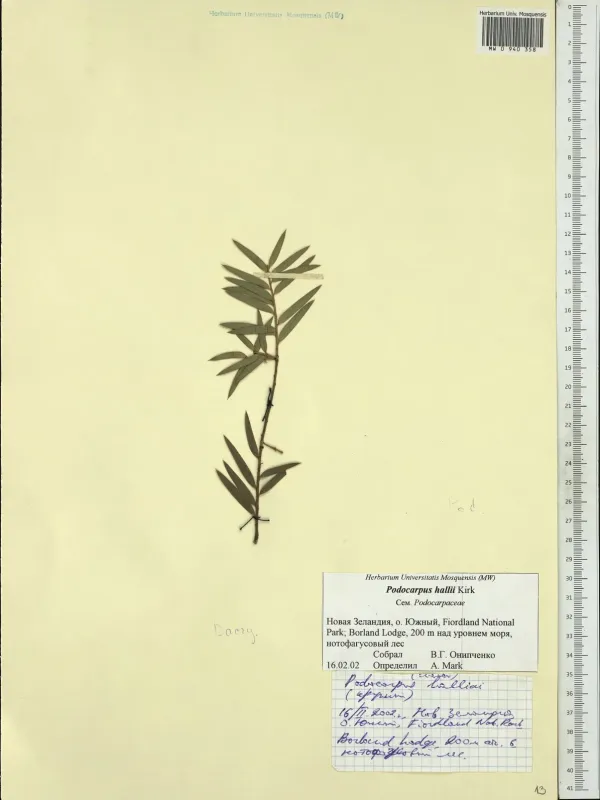
Description
Growing requirements
Hall's Totara (Podocarpus hallii) is a prominent species within the Podocarpaceae family. Native to New Zealand, this slow-growing evergreen conifer is known for its remarkable adaptability to various altitudes and soil types.
The plant thrives in well-drained, fertile soils that retain moisture without becoming waterlogged. It prefers positions sheltered from harsh, drying winds, which allows the foliage to maintain its characteristic leathery, dark green appearance throughout the year.
Botanically, it is distinguished by its variable leaf shape, which tends to be broader and more leathery than related species. As the tree matures, it develops a distinctively flaky, papery bark, adding significant textural interest to any garden setting.
Agricultural practices for this species emphasize the importance of deep, nutrient-rich soil preparation. Proper spacing is essential to allow for airflow, as the tree requires ample space to develop its full, symmetrical crown over many years.
In terms of economic use, the timber of this species is highly valued for its durability and natural resistance to decay, historically being used for construction and woodworking. Today, it serves primarily as an ornamental specimen in gardens and parks.
Main diseases and pests
The primary threats to the health of Podocarpus hallii are fungal pathogens, particularly those affecting the root system, such as Phytophthora species. Poor drainage is the leading cause of these detrimental infections.
Insect pests, including various species of scale insects, can establish colonies on the foliage and branches. These pests can significantly weaken the tree by depleting its sap reserves, often leading to chlorosis and stunted growth.
Environmental stressors such as prolonged drought can severely impact the tree's resilience. When a tree is under drought stress, it becomes significantly more susceptible to secondary pests and opportunistic diseases that might otherwise be harmless.
Excessive application of high-nitrogen fertilizers can cause rapid, succulent growth that is overly attractive to sap-sucking insects. A balanced, slow-release fertilizer regimen is highly recommended to promote steady, healthy growth.
Integrated pest management, including regular visual inspections and the removal of deadwood, is critical for maintaining tree health. Fungicide applications should be used selectively and only when cultural methods fail to control an outbreak.