
Swedish ivy
Plectranthus verticillatus
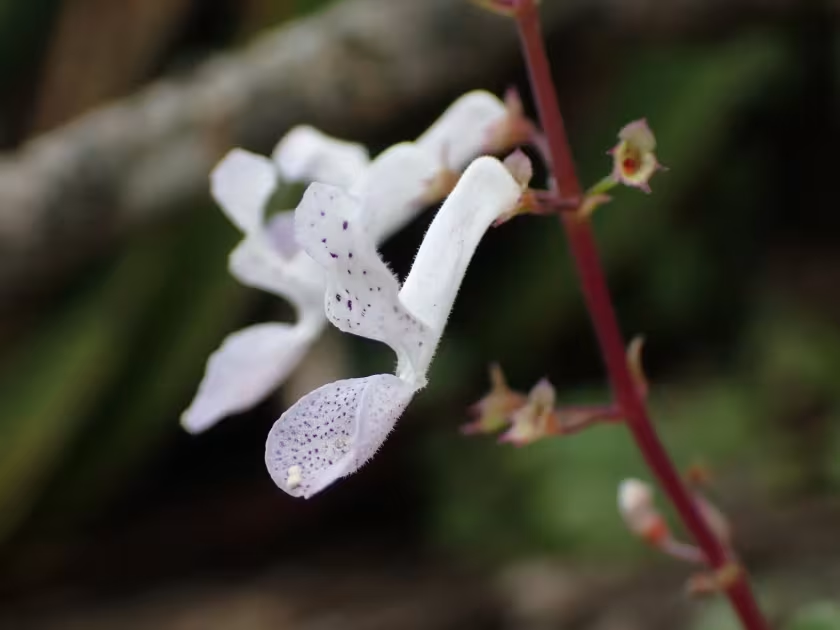
Description
Growing requirements
Swedish ivy (Plectranthus verticillatus) is a herbaceous perennial belonging to the Lamiaceae family. Originally native to the subtropical regions of Southern Africa, it is widely cultivated for its vigorous trailing growth habit and glossy, scalloped foliage.
The plant thrives in moderate to high light conditions, though it must be protected from direct, intense sunlight to prevent leaf scorch. It performs best in temperatures ranging from 18 °C to 24 °C, making it highly adaptable to indoor environments.
A well-draining, nutrient-rich potting medium is essential for optimal growth. A mixture consisting of peat moss, perlite, and high-quality loam provides the necessary aeration and moisture retention required for a healthy root system.
Watering requirements are moderate; the top inch of soil should be allowed to dry out slightly between waterings. Over-saturation of the root zone must be avoided to prevent physiological stress and potential root decay.
Fertilization with a balanced, water-soluble fertilizer is recommended during the peak growing season, approximately every 14 days, to support foliage development and stem vitality.
Main diseases and pests
Pests are a primary concern, with spider mites being the most significant threat in dry, indoor conditions. These insects thrive on the underside of leaves, causing chlorosis and a decrease in photosynthetic efficiency.
Mealybugs and aphids can also colonize the succulent stems and leaf axils, drawing sap from the plant. Manual removal combined with systemic insecticidal treatments is often required for effective control.
Fungal issues, such as crown rot, usually arise from improper irrigation techniques. When water accumulates at the base of the plant, it creates a conducive environment for pathogens like Phytophthora to flourish.
Integrated Pest Management (IPM) practices, including regular sanitation and environmental monitoring, significantly reduce the incidence of disease. Maintaining adequate ventilation is a crucial preventive measure.
Early identification of pest symptoms, such as leaf discoloration or sticky honeydew residue, allows for timely intervention. Proper nutrient management also helps in strengthening the plant's natural resistance to secondary infections.