
Planchonella linggensis
Planchonella linggensis
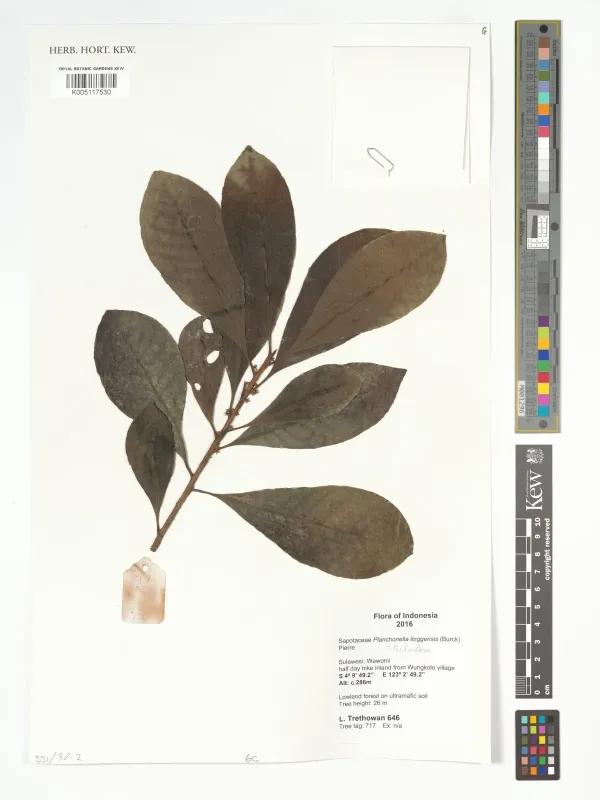
Description
Growing requirements
Planchonella linggensis is an evergreen tree species belonging to the Sapotaceae family. It is native to the tropical regions of Southeast Asia and parts of the Pacific, where it thrives in humid and stable forest environments.
This species is highly dependent on a warm climate with consistent rainfall throughout the year. It does not tolerate frost or cold temperatures, making it suitable only for tropical or subtropical zones with minimal temperature fluctuations.
The ideal growing medium for this plant consists of fertile, well-drained soil rich in organic matter. Proper drainage is essential to prevent root rot, as the species is sensitive to waterlogged conditions, particularly in early developmental stages.
In terms of light, Planchonella linggensis can adapt to varying levels of exposure but prefers bright, indirect light. Young saplings often benefit from the protection of a canopy, while mature trees can handle more direct sunlight.
Cultivation practices involve regular monitoring of growth rates and soil quality. As a forest-dwelling species, it benefits from mulch application, which helps retain soil moisture and adds necessary nutrients as it decomposes naturally.
Main diseases and pests
The primary threats to Planchonella linggensis include various fungal infections, especially in high-humidity environments. These pathogens may cause leaf spot and branch dieback if air circulation is insufficient within the canopy.
Insect pests such as scale insects and aphids represent a significant challenge. These pests weaken the plant by feeding on sap, which often leads to the development of sooty mold on the leaf surfaces due to honeydew accumulation.
Root system vulnerability is another key concern, particularly when the soil structure is poor. Nematodes and soil-borne fungi can severely impair the tree's ability to uptake water and essential minerals from the ground.
Management of these threats is best achieved through cultural practices. Proper spacing of plants, regular removal of dead branches, and ensuring optimal soil drainage are effective ways to minimize the impact of common tropical pests and diseases.
Since the species is not a widely cultivated crop, research on specific chemical controls is limited. Most experts suggest promoting a healthy ecosystem to encourage natural predators, which helps keep pest populations under control.