
Persian ivy
Hedera colchica (K. Koch) K. Koch
Description
Growing requirements
Persian ivy (Hedera colchica) is a vigorous, evergreen woody vine belonging to the Araliaceae family. Native to the Middle East and the Caucasus region, it is widely valued in horticulture for its ability to create dense, glossy green foliage covers.
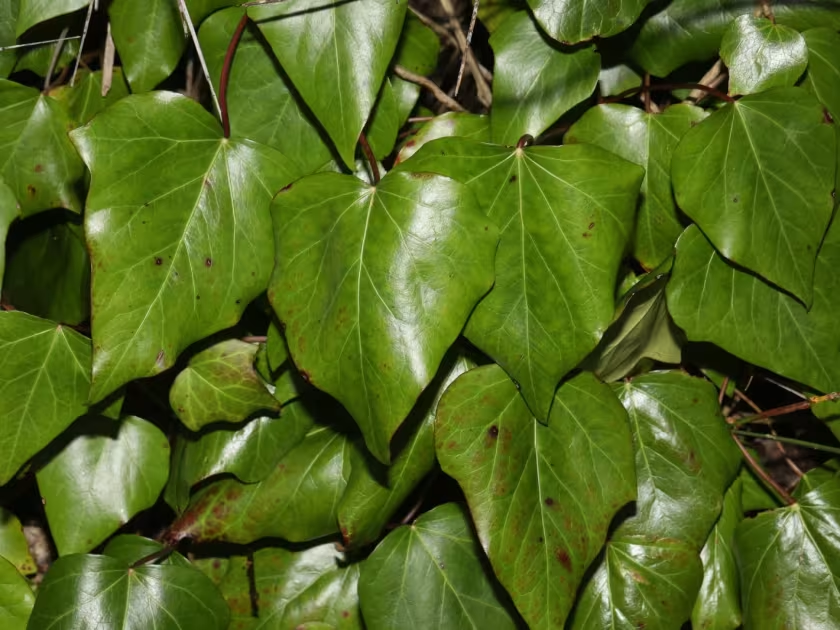
The plant is distinguished by its large, leathery leaves that can grow up to 10 inches in length. Unlike other species of ivy, the foliage of Hedera colchica emits a distinct, musky scent when crushed, which serves as a key identifying botanical feature.
Optimal growth requires rich, moisture-retentive, and well-draining soil with a pH ranging from neutral to slightly alkaline. The plant thrives best in shaded or partially shaded environments, as excessive exposure to harsh sunlight often causes leaf scorch.
Climatically, the plant prefers temperate conditions and is considered moderately hardy. In colder zones, it should be sited in sheltered locations, such as against walls, to protect the foliage from the damaging effects of cold, desiccating winter winds.
Agricultural management involves regular irrigation during the initial establishment phase and the growing season. Annual mulching with organic matter helps retain soil moisture and suppresses weeds, while pruning is essential to control the plant's spread.
Main diseases and pests
Spider mites represent a primary pest threat, particularly in hot and dry weather conditions. These pests feed on the cell sap, causing the foliage to appear dull or stippled, which can significantly reduce the ornamental value of the vine.
Leaf spot diseases are commonly associated with poor drainage and excessive leaf wetness. If the foliage remains damp for extended periods, fungal pathogens can easily colonize the leaf tissue, requiring chemical intervention or improved sanitation.
Scale insects are another common concern that can weaken the plant by extracting essential nutrients from the stems. Early identification is crucial for effective control through contact insecticides or horticultural oils.
Root rot is a critical threat that usually stems from waterlogged soil conditions. To prevent this, gardeners must ensure that the planting site has sufficient drainage capacity to prevent water stagnation around the root ball.
Proper plant hygiene, such as removing dead or infected foliage and providing adequate space for air circulation, remains the most effective strategy for maintaining a healthy and robust Persian ivy in any landscape.