
Algerian ivy
Hedera canariensis Willd.
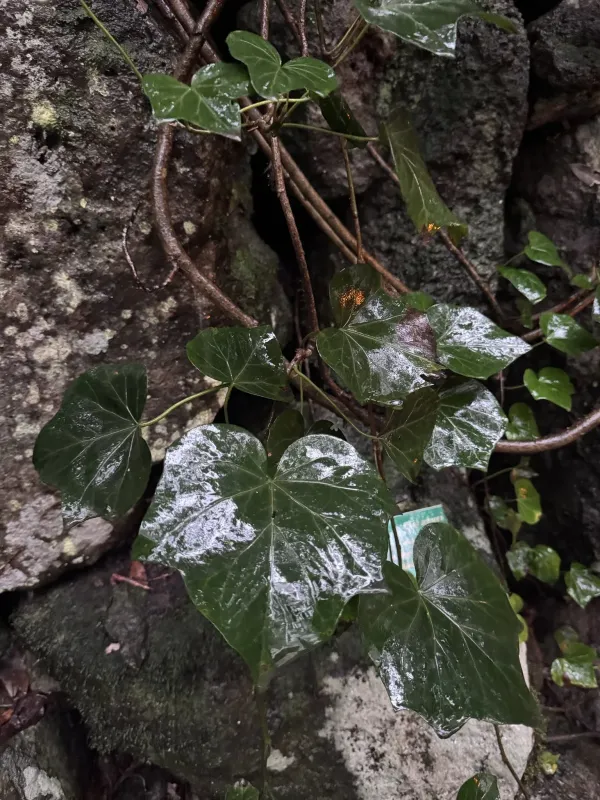
Description
Growing requirements
Algerian ivy (Hedera canariensis) is a robust evergreen woody vine belonging to the Araliaceae family. Known for its large, glossy leaves and rapid growth, it is a popular choice for wall coverings and ground cover in suitable climates.
The plant originates from the Canary Islands and North Africa. It is adapted to mild climates, where it can thrive outdoors year-round, while in colder regions, it is often utilized as an indoor or conservatory plant.
The culture requires fertile, well-draining soil with a pH ranging from neutral to slightly acidic. Providing adequate soil aeration is crucial to prevent root suffocation, especially in container-grown specimens.
Light requirements are flexible, but the plant performs best in partial shade. Excessive exposure to direct sun can lead to leaf scorching, while deep shade might slow down growth and reduce the density of the foliage.
Horticultural maintenance includes regular irrigation during the growing season and periodic fertilization. Pruning is essential to manage the vine's spread and maintain its aesthetic appeal in landscaped areas.
Main diseases and pests
Spider mites are the most prevalent pest for this species, especially in environments with low humidity. They thrive on the underside of leaves, causing significant damage if left untreated.
Scale insects can also infest the stems and leaves, extracting nutrients and weakening the plant. Mechanical removal combined with systemic pesticide application is recommended for control.
Leaf spot diseases, caused by various fungal pathogens, often appear during periods of high humidity and poor ventilation. Maintaining a clean growing environment is key to prevention.
Root rot, caused by overwatering or poorly drained substrates, poses a lethal threat to the plant. It is characterized by yellowing foliage and stunted growth, requiring immediate repotting.
Regular monitoring for pests and diseases is a critical component of successful ivy cultivation. Early intervention ensures the longevity and health of the ornamental crop.