
Japanese ivy
Hedera rhombea (Miq.) Siebold ex Bean
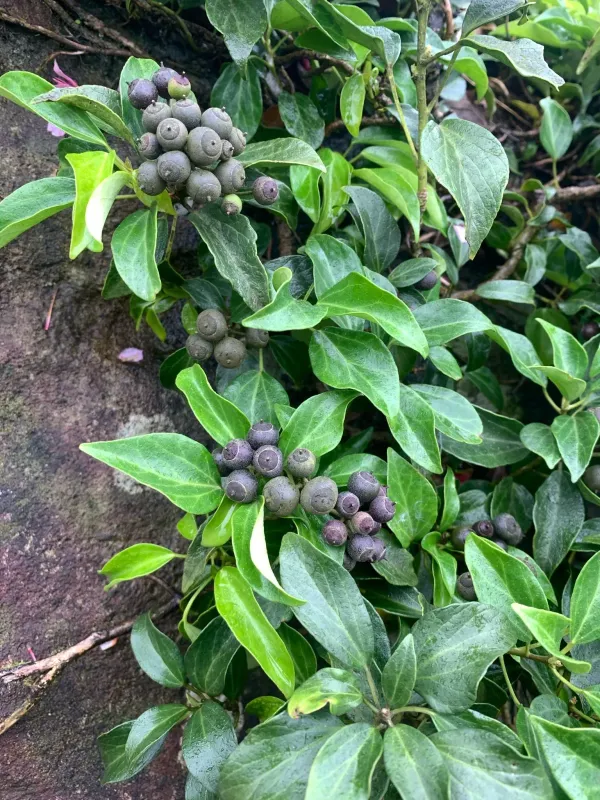
Description
Growing requirements
Japanese ivy (Hedera rhombea) is an evergreen woody vine belonging to the Araliaceae family. Native to East Asia, including Japan and Korea, this species is well-adapted to forest understories and rocky habitats, where it typically utilizes tree trunks or stones for support.
The plant thrives in temperate climates with moderate humidity levels. While it is relatively adaptable, it prefers partial to full shade, as intense direct sunlight can scorch its distinctively shaped, rhomboid-like leaves during the summer months.
Regarding soil, Japanese ivy requires well-draining substrates rich in organic matter. A slightly acidic to neutral pH level is ideal for nutrient absorption. Providing a consistent moisture regime is crucial, though waterlogging must be avoided to maintain healthy root systems.
Cultural practices involve annual pruning to maintain a tidy appearance and promote denser growth. During the initial planting phase, it is advisable to provide structural support, such as trellises or walls, allowing the plant's aerial roots to anchor effectively.
In landscaping, this climber is highly valued for vertical greening, covering masonry, and creating dense green backdrops. Its ability to tolerate shaded environments makes it a versatile choice for areas where other flowering plants might struggle to establish.
Main diseases and pests
Common pests affecting this vine include spider mites and scale insects, which are often attracted to plants grown in overly dry or poorly ventilated environments. Proactive management involves rinsing foliage and using targeted organic pest control methods when necessary.
Diseases are typically linked to moisture-related issues, such as leaf spot and various root rots. Preventing these involves ensuring adequate air circulation through proper spacing and strictly avoiding overhead irrigation that leaves foliage wet for extended periods.