
Common ivy
Hedera helix L.
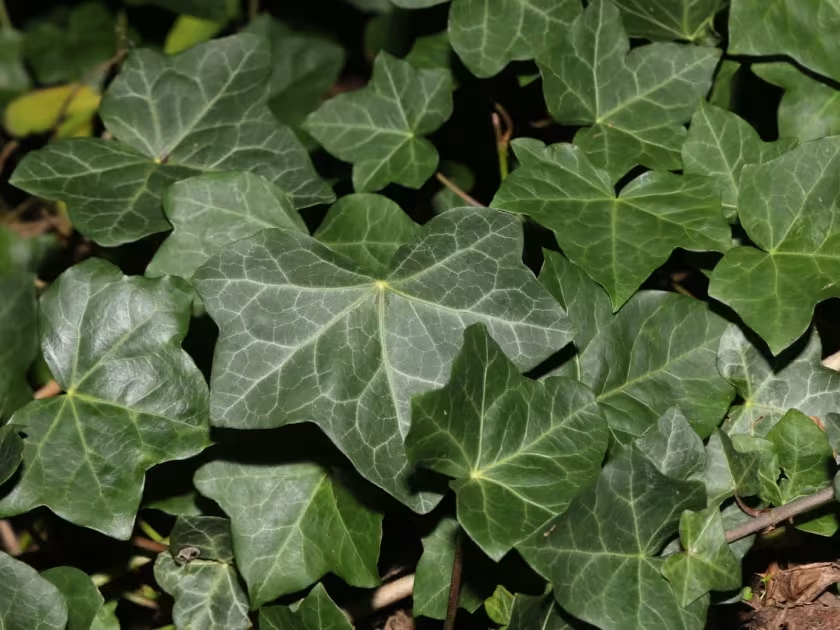
Description
Sowing dates
Propagation of Hedera helix is primarily achieved through stem cuttings, which ensures the preservation of genetic traits and provides a high success rate.
Cuttings should be taken from healthy, non-flowering shoots during the spring or early summer to optimize the natural growth cycle of the plant.
The cuttings are placed in a well-draining peat-based medium and kept in a high-humidity environment until a robust root system has fully developed.
While seed propagation is possible, it is not recommended for commercial or landscape applications due to the slow germination process and the need for prior stratification.
Once established, plants should be spaced at intervals of 40 to 60 centimeters, depending on whether they are intended for ground cover or vertical wall coverage.
Growing requirements
Common ivy belongs to the Araliaceae family and is recognized as a hardy, evergreen, woody vine that utilizes aerial roots to attach itself to various surfaces.
The plant thrives in shaded or partially shaded environments, as direct sunlight can easily scorch the foliage and hinder its natural lush growth pattern.
It prefers fertile, moist, and well-drained soil with a neutral to slightly alkaline pH level to maintain optimal nutrient absorption throughout the growing season.
While Hedera helix is resilient in temperate climates, it requires protection from desiccating winter winds which can cause significant tissue damage.
Consistent moisture management is essential during the initial planting stages; however, once established, the plant demonstrates good drought tolerance.
Main diseases and pests
Common pests affecting common ivy include scale insects, aphids, and spider mites, which can cause severe stunting if left untreated in greenhouses or gardens.
Management of these pests involves the use of horticultural oils or systematic insecticides combined with improved ventilation to discourage infestation.
Fungal pathogens such as bacterial leaf spot or anthracnose can cause unsightly lesions on the leaves, usually appearing in high-humidity conditions.
Preventative measures include avoiding overhead watering and ensuring that the foliage remains dry to minimize the risk of spreading fungal spores.
Root rot is a critical threat typically resulting from poor drainage or over-irrigation, requiring immediate soil amendment and reduction in water frequency.
Harvesting
Hedera helix is extensively used in landscape architecture for erosion control, as its extensive root system stabilizes soil effectively on slopes.
The leaves of the plant are harvested for use in the pharmaceutical industry due to the presence of active saponins, which are key components in respiratory medications.
In interior design, the plant is a staple for green walls and air purification systems, appreciated for its ability to filter indoor pollutants effectively.
Maintenance pruning is a regular requirement to keep the invasive nature of the vine in check and to promote denser growth in landscaped settings.
Harvesting for commercial plant production involves careful selection of disease-free parent stock to ensure the quality and vigor of the resulting offspring.