
Pernettya pumila
Pernettya pumila
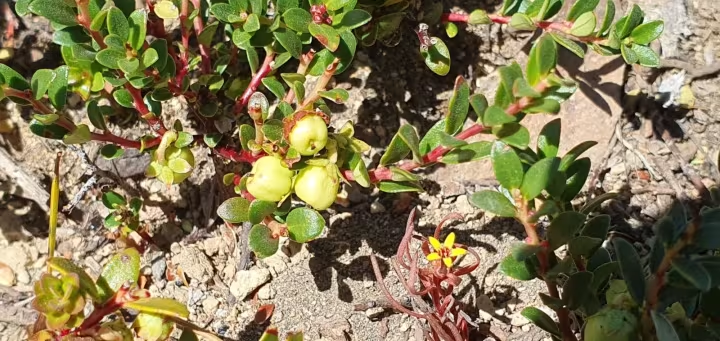
Description
Growing requirements
Pernettya pumila is a distinct species belonging to the Ericaceae family. It is characterized as a low-growing, prostrate, evergreen shrub that naturally forms dense, resilient mats, making it an excellent ground cover.
Originating from the cold and alpine regions of South America, specifically in Chile and Argentina, this plant is well-adapted to harsh environmental conditions. Its natural habitat includes rocky slopes and boggy mountain areas.
Cultivation requires specific soil conditions, primarily an acidic environment with a pH between 4.5 and 5.5. The soil should be porous and rich in organic matter, such as peat or pine bark, to ensure proper root development and aeration.
The plant thrives in partial shade but can tolerate full sun if provided with consistent moisture. It is crucial to protect the root zone with mulch to prevent rapid fluctuations in temperature and moisture levels during the growing season.
In terms of usage, it is highly valued for its ornamental appeal, featuring small leathery leaves and decorative, persistent berries. It is primarily used in rock gardens, scree beds, and as a low-maintenance ground cover in temperate regions.
Main diseases and pests
The primary threats to Pernettya pumila involve fungal pathogens caused by waterlogged soil, particularly root rot (Phytophthora spp.). Proper drainage is the most effective preventative measure against these diseases.
Pests such as spider mites and mealybugs can occasionally infest the foliage, particularly in drier or stressed conditions. Maintaining plant vigor through proper site selection and watering is key to avoiding significant damage.