
Lepidium ruderale
Lepidium ruderale L.
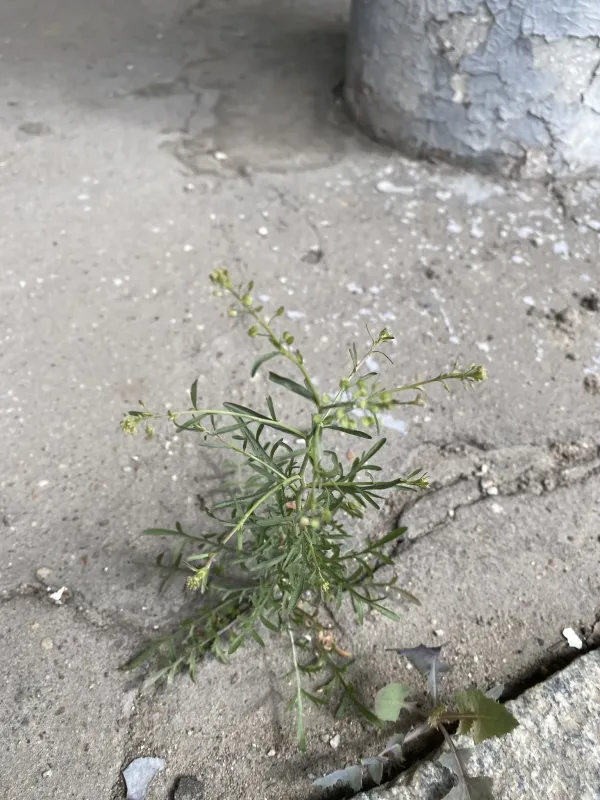
Description
Sowing dates
Lepidium ruderale, commonly known as narrow-leaved pepperwort, is an annual plant belonging to the Brassicaceae family. It is a prolific seeder capable of germinating under varied environmental conditions starting from early spring.
The seeds demonstrate high longevity, remaining viable in the soil for several years. This persistence makes it a challenging weed in arable farming, as the seed bank is constantly replenished if plants are not eradicated before flowering.
Germination typically occurs when soil temperatures reach 4 to 6 degrees Celsius, providing the plant with a competitive advantage over slower-growing crop species in the early season.
While the plant reproduces entirely through seed dispersion, its rapid growth rate allows it to complete multiple generations in a single season if moisture is adequate.
For research and monitoring purposes, tracking the germination windows of this species is essential, as the timing of tillage operations can significantly impact the population density of subsequent infestations.
Growing requirements
As a true ruderal species, this plant is well-adapted to disturbed soils. It thrives in compacted, nutrient-poor, or even saline soils where other vegetation might struggle to survive.
The plant exhibits high drought tolerance but performs best in open, sunny environments where competition for light is minimal. It is frequently found along roadsides, farm margins, and fallow fields.
Regarding soil chemistry, Lepidium ruderale is highly adaptable, showing growth across a wide pH spectrum. It does not require specific fertilization and often outcompetes crops in nitrogen-limited environments.
Climate requirements are generally flexible, allowing the species to establish itself across diverse agro-climatic zones. It is particularly successful in temperate regions with moderate spring rainfall.
Effective management requires consistent mechanical disturbance. Shallow tillage during the vegetative rosette stage is the most efficient way to prevent the establishment of deep root systems.
Main diseases and pests
Lepidium ruderale poses a significant threat as a host for various agricultural pests and diseases. It serves as an alternative food source for crucifer pests, such as flea beetles and pollen beetles.
The plant facilitates the spread of pathogens, including various strains of clubroot and downy mildew, which are detrimental to economically important brassica crops like canola, mustard, and cabbage.
Effective pest management programs must include the clearance of this weed from field borders to break the life cycle of these pests before they migrate into the main crop area.
Chemical control is most effective when plants are young. Once the plant enters the reproductive phase and develops tough, lignified stems, its resistance to contact herbicides increases substantially.
- Early mechanical removal of rosettes.
- Integrated pest management targeting field borders.
- Implementation of crop rotations including competitive non-brassica crops.