
Field pepperweed
Lepidium campestre (L.) R. Br.
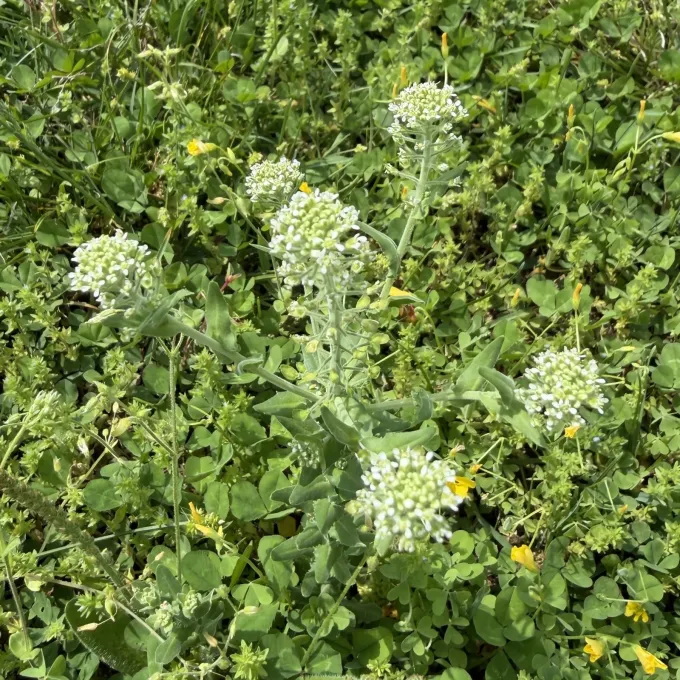
Description
Sowing dates
Field pepperweed (Lepidium campestre) is typically cultivated as an autumn-sown or spring-sown crop. For autumn planting, the optimal period is late August to early September, allowing the plants to develop a strong rosette before winter sets in, ensuring better cold hardiness.
Spring sowing should be performed as early as soil conditions permit, usually in April. The seeds are characterized by good germination rates in cooler spring temperatures, which allows the crop to establish itself before the arrival of warmer, drier conditions.
The recommended seeding rate is between 8 and 12 kilograms per hectare, depending on soil fertility and seed quality. Given the small size of the seeds, a shallow planting depth of 1–2 centimeters is essential to avoid delayed emergence or failure.
Consolidating the soil after planting using a roller is a highly recommended practice. This technique improves the contact between the seeds and the soil moisture, resulting in more uniform emergence, which is crucial for maximizing yield potential.
Row spacing is typically set at 15–20 centimeters. This arrangement ensures that the crop can be managed with standard agricultural machinery while maintaining an optimal plant population density that prevents overcrowding and competition for resources.
Growing requirements
As a member of the Brassicaceae family, field pepperweed exhibits a high degree of adaptability to various environmental conditions. However, it thrives best in open, sunny locations where light competition is minimal, as shading significantly reduces seed production.
The crop prefers fertile, well-drained loamy or sandy-loam soils. It is sensitive to waterlogged conditions, which can lead to root diseases and poor growth, so fields with good drainage profiles are preferred for successful production.
Water requirements are moderate throughout most of the growth cycle, but adequate moisture during the flowering and seed-filling stages is essential. Drought stress during these critical phases can lead to lower oil content and reduced overall seed weight.
Climate adaptability is one of the strengths of Lepidium campestre. It is well-suited for temperate climates and can withstand significant winter temperatures, provided the soil drainage is sufficient to prevent ice-related root damage.
Crop rotation is vital for the long-term sustainability of field pepperweed production. It should not follow other cruciferous crops, such as rapeseed or mustard, to prevent the buildup of soil-borne pathogens and specific insect populations that target this family.
Yield
The yield of field pepperweed is influenced by soil nutrient management and regional climate patterns. Under optimized agronomic conditions, producers can expect to achieve stable yields ranging from 1.0 to 2.0 tonnes of seed per hectare.
The primary economic value of the crop lies in its oil-rich seeds, which contain high-quality fatty acids. These characteristics make it a viable alternative for industrial applications, including the production of lubricants or biodiesel feedstock.
Maximizing yield requires careful attention to plant density. Overly dense stands can lead to uneven ripening and lodging, while sparse stands fail to capture the full sunlight potential of the field, resulting in suboptimal hectare yields.
Early-season weed control is a critical factor for achieving high yields. Since field pepperweed has a relatively slow growth rate in the seedling stage, ensuring a weed-free environment during the first few weeks is essential for crop establishment.
Quality of the seed harvest is determined by the cleaning and drying process. Proper management of the moisture content of the seeds immediately after harvest prevents oil oxidation and ensures the longevity of the stored product.
Main diseases and pests
Field pepperweed faces pressure from standard Brassicaceae pests. The flea beetle is the most significant threat during the early growth stages, as it can decimate young seedlings before they develop their true leaves and protective chemical defenses.
During the reproductive phase, the crop is susceptible to pollen beetles, which feed on buds and can cause substantial flower loss. Integrated pest management strategies, including monitoring and timely intervention, are necessary to protect the yield.
Fungal diseases like downy mildew (Peronospora) can occur when humidity levels are consistently high and ventilation within the canopy is poor. Managing plant density and field airflow are effective preventive measures against these fungal issues.
Root rots are frequently associated with poor rotation practices and compacted soil conditions. Ensuring that the field is not exclusively used for Brassicaceae crops over several seasons helps break the life cycles of these pathogens.
A proactive scouting program is essential for all farmers. Identifying pest or disease pressure early allows for precision application of control measures, reducing the need for broad-spectrum chemical interventions and promoting a more sustainable approach.
Harvesting
Harvesting field pepperweed requires precision as the seed pods can shatter if left too long in the field. The harvest window opens when the plants reach the wax maturity phase and the seed moisture content drops to 14–16 percent.
Direct combining is the preferred method for harvesting this crop. Adjusting the combine settings—specifically the drum speed and concave clearance—is critical to prevent the small seeds from being crushed or blown out of the machine during the cleaning process.
If the crop shows signs of uneven ripening, swathing may be considered as an alternative. This process allows the harvested material to dry down evenly, which can be advantageous if weeds are present or if the weather forecast is unpredictable.
Equipping the combine with specialized headers for small-seeded crops helps minimize header loss, which is a common issue when dealing with fragile pods. Ensuring all equipment is properly maintained before the harvest begins is vital for efficiency.
Immediate post-harvest processing involves cleaning the seed from chaff and drying it to a stable moisture level of below 10 percent. Proper storage conditions are essential for maintaining the stability and quality of the seed oil over time.