
Lepidium appelianum
Lepidium appelianum Al-Shehbaz
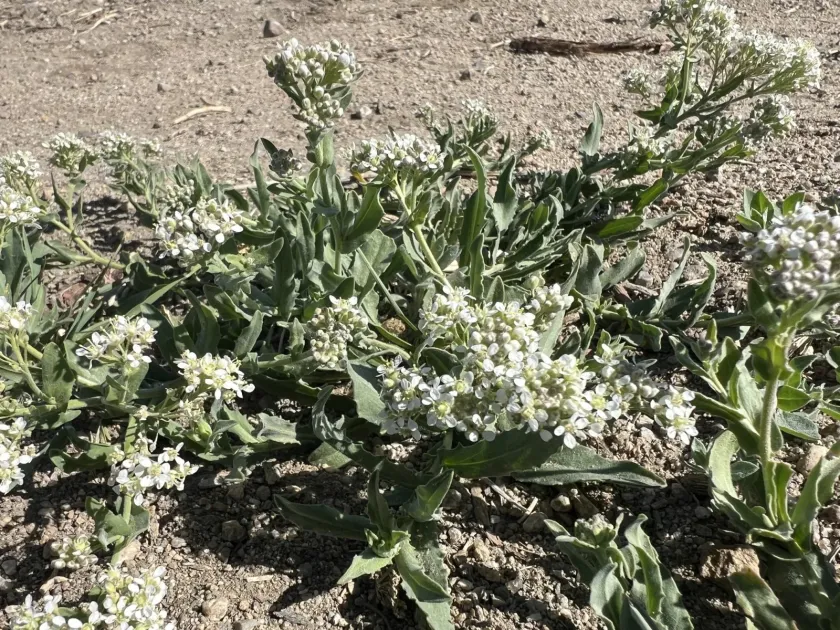
Description
Sowing dates
As a perennial herbaceous species, Lepidium appelianum begins its growing season in early spring as soon as soil temperatures reach favorable levels.
Seeds should be sown at a shallow depth, typically 1 to 2 centimeters, to facilitate rapid emergence and prevent exhaustion of the seedling's energy reserves.
Proper spacing is crucial for this crop, as it tends to develop a robust root system and significant lateral branching as it matures.
Fall sowing is often recommended in certain climates to allow for natural cold stratification of the seeds, which enhances uniform germination in the spring.
Selecting clean, weed-free soil for sowing is essential, as young seedlings can be easily outcompeted by more aggressive agricultural weeds.
Growing requirements
The plant thrives in open, sun-exposed locations, requiring full sunlight for maximum biomass production and efficient metabolic processes.
It displays remarkable drought tolerance, making it a resilient option for regions with variable rainfall patterns or limited irrigation infrastructure.
While adaptable to a wide range of soil types, the species performs best in well-drained, sandy loam soils that provide excellent aeration for its roots.
A neutral to slightly alkaline pH is preferred for optimal nutrient uptake, reflecting the plant's natural adaptation to specific ecological niches.
Consistent, moderate moisture is beneficial during the early vegetative stage, whereas mature plants can withstand drier conditions quite effectively.
Main diseases and pests
Crucifer flea beetles are the primary insect threat, capable of causing significant damage to seedling cotyledons and early leaf growth.
Various fungal pathogens, particularly those thriving in high humidity, can cause damping-off in dense plantings if air circulation is insufficient.
Aphids pose a recurring risk, especially during periods of rapid leaf development, as they drain nutrients and stunt the overall vigor of the plant.
Integrated pest management strategies, including the use of trap crops and targeted biological controls, are recommended for sustainable cultivation.
Maintaining a diverse crop rotation cycle prevents the buildup of soil-borne pathogens common to the Brassicaceae family in the field.
Harvesting
Harvesting of seed-bearing parts should occur when the pods start turning brown and become brittle, indicating full physiological maturity.
Given the tendency of the pods to dehisce (shatter) upon drying, harvesting should be performed when seeds are just reaching full ripeness to minimize losses.
Post-harvest processing involves immediate drying in well-ventilated areas to reduce seed moisture content to below 10 percent for long-term stability.
Mechanical threshing techniques are suitable for larger plots, provided that the equipment is adjusted to handle the delicate structure of the plant.
Stored seeds must be kept in cool, dark, and dry environments to maintain viability and prevent metabolic decline during the off-season.