
Hoary cress
Lepidium draba L.
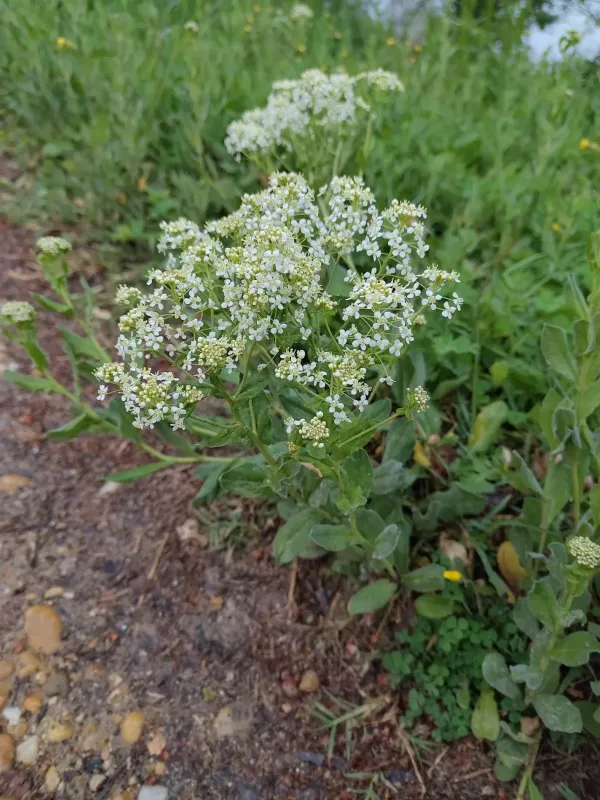
Description
Sowing dates
Hoary cress (Lepidium draba L.) is a perennial herbaceous plant belonging to the Brassicaceae family. While often classified as a persistent weed in agricultural fields, it is a plant of significant biological interest due to its resilience and widespread distribution.
The plant spreads efficiently through a deep and extensive system of horizontal rhizomes, making it difficult to eradicate from arable land. Seed production is prolific, with the potential to remain viable in the soil seed bank for several years.
Growth typically initiates in early spring, as soon as soil temperatures exceed 6-8 degrees Celsius. The formation of basal rosettes provides a quick start for the plant in competing for space and sunlight.
In regions where it is managed or studied, the timing of its development is closely tied to the moisture levels in the topsoil during the vernal months. Its high level of environmental plasticity ensures survival across diverse landscapes.
The flowering phase generally occurs in late spring to early summer, resulting in clusters of small, white, fragrant flowers that subsequently develop into heart-shaped seed pods.
Growing requirements
Hoary cress demonstrates remarkable adaptability to various soil types, ranging from heavy clays to saline or gravelly substrates. This versatility makes it a highly competitive species in various field conditions.
The plant thrives in full sun exposure and is highly sensitive to dense shade. Its competitive ability is maximized in open, well-lit agricultural areas where it can establish dominance over other low-growing vegetation.
A key physiological advantage is the plant's deep root system, which allows it to access water reserves that are unavailable to more shallow-rooted crops. This trait makes it exceptionally drought-tolerant.
Soil pH levels generally do not act as a major limiting factor, although neutral to slightly alkaline soils tend to support the most vigorous biomass production. Excessive moisture, particularly in winter, can hinder growth.
Field management requires careful monitoring of the root zone, as mechanical disturbance of the rhizomes can often promote regrowth rather than suppression, necessitating integrated approaches.
Main diseases and pests
Being a member of the Brassicaceae family, hoary cress is susceptible to the same pathogens as commercial crops like canola, mustard, and cabbage. These diseases can proliferate rapidly if environmental conditions are favorable.
Clubroot is a major threat, impacting the root system and severely limiting nutrient uptake. Powdery mildew often occurs in the late season, leading to chlorosis and premature leaf drop.
Pest pressure is primarily driven by flea beetles, which can cause significant damage to leaves during the early vegetative stages. Monitoring these insects is crucial for maintaining plant health.
Other notable threats include various species of aphids and larvae that feed on the foliage and budding structures, potentially reducing the overall reproductive output of the plant colonies.
- Clubroot disease.
- Powdery mildew.
- Flea beetles.
- Aphids.
- Cabbage moths.