
Garden cress
Lepidium sativum L.
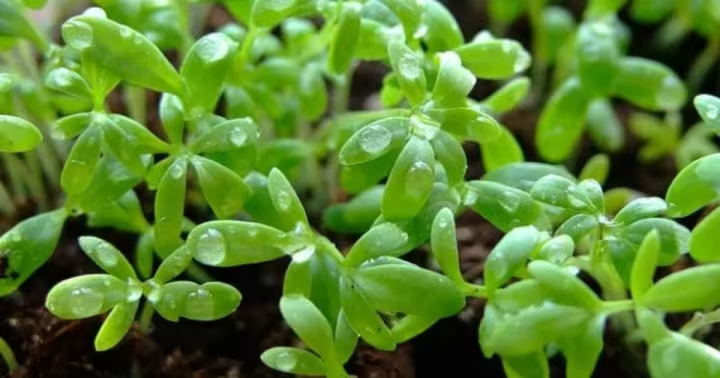
Description
Sowing dates
Garden cress (Lepidium sativum L.) is a fast-growing annual plant belonging to the Brassicaceae family. Its seeds begin to germinate at temperatures as low as 2–3°C, allowing for early sowing in open ground as soon as the soil thaws.
The crop can be grown year-round in greenhouses or on indoor windowsills. Sowing is typically carried out in successions every 10–14 days to ensure a continuous supply of fresh, nutrient-rich greens for consumption.
Seeds are sown in rows 10–15 cm apart or broadcast onto moist substrates. When sowing directly in soil, seeds should be covered with only 0.5–1 cm of earth, as they are small and require close contact with a moist environment to sprout effectively.
At an optimal temperature of 15–18°C, seedlings emerge within 3–4 days. Maintaining proper seeding density is crucial to prevent the plants from becoming leggy or developing fungal issues during the cotyledon stage.
For rapid production in home environments, hydroponic methods or growing on paper towels, cotton, or specialized fiber mats are frequently used, allowing the crop to reach maturity in just 2–3 weeks.
Growing requirements
Garden cress is a cool-season, moisture-loving crop. It requires consistent irrigation, especially during warm weather, as water stress triggers early bolting and negatively impacts the flavor of the leaves.
The plant thrives best in light, fertile, loamy, or sandy soils with a neutral pH. Heavy clay soils may lead to poor growth and root rot due to restricted aeration and water drainage.
While the plant requires light, it may suffer from direct, intense sunlight during summer months, which accelerates the transition to the flowering stage. During these times, light shading of the garden beds is recommended.
The ideal temperature for developing high-quality leaf rosettes is between 12–18°C. Temperatures exceeding 20°C, combined with long daylight hours, cause the plant to produce flower stalks prematurely, making the leaves tough.
The crop is sensitive to soil conditions and can accumulate nitrates if excess nitrogen fertilizers are applied; therefore, it is best to incorporate organic amendments well in advance of sowing.
Yield
The yield of garden cress depends largely on the growing method and sowing density. With proper agricultural practices, one square meter can produce between 0.5 to 1.5 kg of fresh greens per production cycle.
In industrial-scale vertical farming, yields can be significantly higher due to the controlled environment, year-round production cycles, and optimized nutrient delivery systems.
Marketable produce consists of leaf rosettes measuring 10–15 cm in height. Yield decreases significantly if planting is too dense, as this increases susceptibility to diseases and compromises the visual quality of the leaves.
Maximum productivity is achieved by using commercial-grade varieties specifically bred for uniform leaf size and delayed bolting, ensuring a longer harvest window for the grower.
The produce is primarily used fresh in salads, sandwiches, and soups. Its high content of iodine, iron, and vitamins B and C makes it highly sought after for healthy, diet-conscious culinary applications.
Main diseases and pests
The primary pest affecting garden cress is the flea beetle, which can decimate seedlings during the cotyledon phase within a few days. Protective row covers are highly effective for prevention.
High humidity combined with poor ventilation often leads to damping-off disease. This condition causes seedlings to collapse and the root collars to decay, rendering the crop unmarketable.
In greenhouse environments, aphids may become an issue. It is vital to follow strict sanitation practices, including proper air circulation and avoiding over-watering, to prevent the proliferation of pests and fungal pathogens.
The use of pesticides is strictly limited on this crop due to its short growth cycle (15–25 days), so growers must rely heavily on preventive measures and cultural practices to maintain plant health.
Crop rotation is highly recommended; avoiding planting garden cress after other Brassica species helps prevent the accumulation of soil-borne pathogens in the garden plot.
Harvesting
Harvesting begins when the plants have formed a well-developed rosette of leaves, usually occurring 15–25 days after germination. The crop is typically harvested by cutting the entire plant at the soil level.
To maximize total yield, a single cut of the entire plot is recommended. Regrowth after harvesting is generally slow, and secondary growth typically results in lower-quality leaves compared to the primary harvest.
Harvesting is best performed in the cool hours of the morning or evening when the leaves are fully turgid. Produce should be cooled immediately after harvest, as the high water content makes the leaves prone to wilting at room temperature.
For commercial sales, the greens are often packaged with their roots attached, particularly if grown on mats or substrates, which helps maintain freshness for a longer period.
One must avoid over-maturing the plants; once the flower stalk begins to develop, the leaves become bitter and fibrous, losing both their nutritional quality and their appeal to consumers.