
Pentzia incana
Pentzia incana
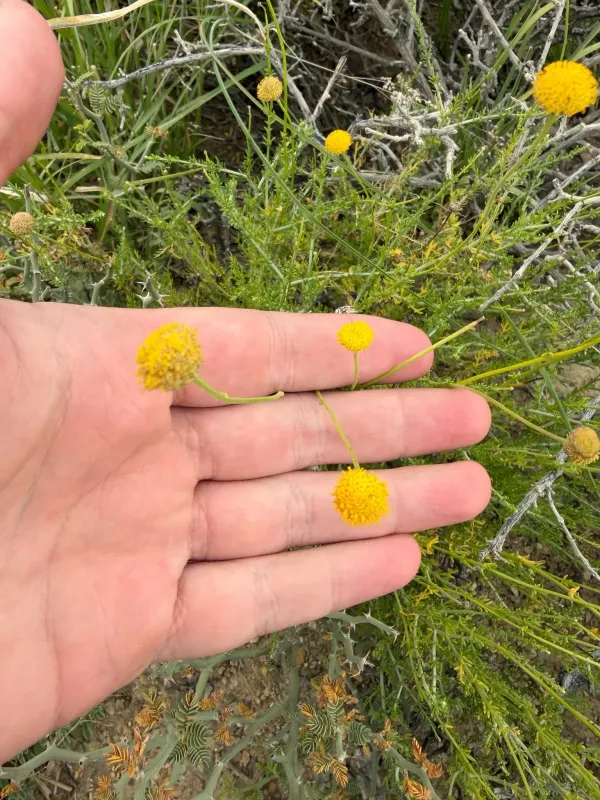
Description
Growing requirements
Pentzia incana, commonly known as the Karoo bush, is a perennial subshrub belonging to the Asteraceae family. It is widely recognized for its high tolerance to aridity and its role as a key vegetation component in desert and semi-desert ecosystems.
The plant originates from Southern Africa, where it has evolved to thrive in environments with limited rainfall. Its physical structure consists of woody, branched stems covered with fine, silvery-grey foliage, which helps the plant minimize transpiration loss under high temperatures.
For optimal growth, Pentzia incana requires well-drained, sandy, or rocky soils. It is highly adaptable to various pH levels and performs exceptionally well in alkaline or saline environments where traditional crops might fail.
Regarding climate, it requires full sun exposure to maintain its characteristic growth habit. The plant is frost-hardy, allowing it to survive in regions with significant temperature fluctuations, which is critical for its survival in natural pastures.
In agricultural practice, this species is primarily used as a fodder plant. It provides sustainable grazing for livestock, particularly sheep, and acts as an effective soil stabilizer, protecting fragile arid landscapes from wind and water erosion.
Main diseases and pests
The primary agronomic threat to Pentzia incana is waterlogging, which severely compromises its root health and leads to decay. Ensuring proper field drainage is the most vital step in managing the health of these shrubs.
Fungal infections, specifically root rot, occur when moisture persists around the base of the plant for too long. Proper site selection is the best preventative strategy to mitigate the risk of these soil-borne pathogens.
Pests such as aphids and spider mites can occasionally affect the plant during prolonged dry spells. These pests usually target younger shoots, so keeping the plant healthy through managed grazing cycles can help maintain its natural resistance.
Disease management should focus on cultural practices rather than heavy chemical application. Providing sufficient space between plants ensures adequate airflow, which significantly reduces the risk of foliar diseases like powdery mildew.
Overgrazing poses a secondary threat, as it can deplete the plant's reserves and create open wounds that invite secondary infections. A well-managed grazing rotation is essential for the long-term sustainability of Pentzia incana stands.