
Pentzia globosa
Pentzia globosa
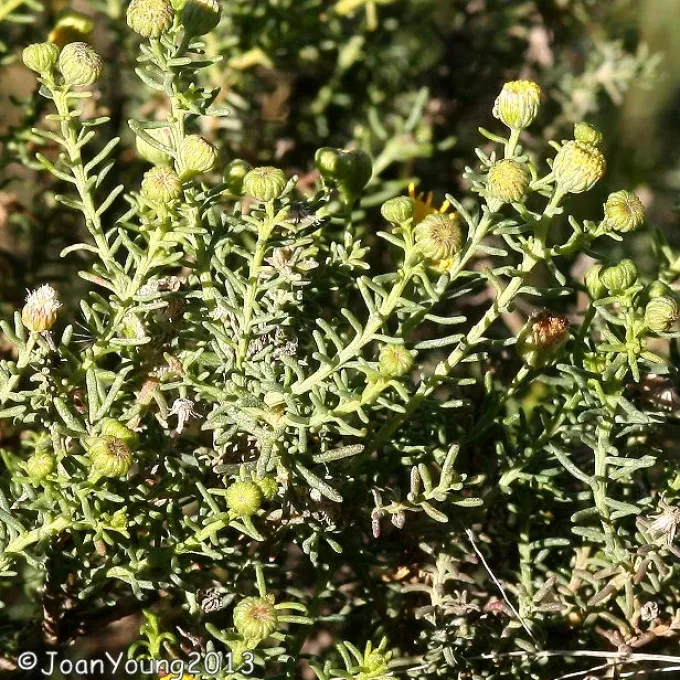
Description
Growing requirements
Pentzia globosa, commonly known as the Karoo sheep bush, is a hardy perennial subshrub belonging to the Asteraceae family. Originating from the arid regions of Southern Africa, it is an essential plant for livestock production in water-scarce environments.
The plant is characterized by its compact, globe-like growth habit and finely divided, silvery-grey foliage. This morphology is an evolutionary adaptation that significantly reduces water loss through transpiration, allowing the plant to thrive in extreme heat.
Regarding soil requirements, Pentzia globosa prefers well-drained sandy or loamy substrates. It exhibits remarkable tolerance to alkaline and saline soil conditions, where many other forage species would fail to establish, making it a critical component of semi-desert rangelands.
In terms of cultivation, the plant is largely self-sustaining. It propagates effectively by seed and responds well to careful grazing management. Its ability to regrow rapidly after defoliation makes it a preferred species for sustainable pastoralism.
Economically, the plant is highly valued for its protein content and palatability to sheep and goats. It remains green and nutritious during dry seasons when other forage sources dry up, acting as a vital survival food for herds in arid pastoral zones.
Main diseases and pests
The primary threats to Pentzia globosa include root rot pathogens that proliferate during periods of excessive soil moisture. Maintaining good drainage is the most effective preventative measure against these fungal diseases in an agricultural setting.
Insect pests such as locusts and grasshoppers can cause significant defoliation during outbreak years. Integrated pest management strategies, focusing on biological controls and monitoring, are preferred to maintain the ecological balance of the grazing lands.
Competition from invasive weeds during the germination and establishment phase can impede the growth of young plants. Careful rangeland management, including seasonal grazing resting periods, is crucial to ensuring the dominance of the target fodder species.
Overgrazing remains the greatest threat to the long-term productivity of Pentzia globosa stands. Continuous grazing without rotation weakens the root system and reduces the plant's capacity for secondary vegetative growth.
Environmental fluctuations, particularly unseasonable frost, can damage delicate new growth during the spring transition. While the plant is drought-hardy, extreme temperature dips can temporarily limit productivity and require management adjustments.