
Pentzia cooperi
Pentzia cooperi
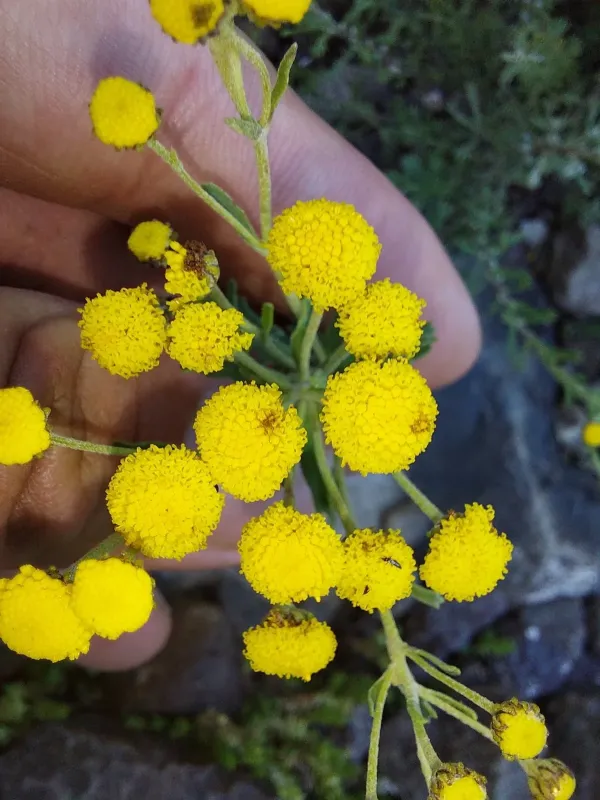
Description
Growing requirements
Pentzia cooperi is a perennial subshrub belonging to the Asteraceae family. This resilient plant is native to the arid regions of Southern Africa and has evolved to thrive in environments characterized by prolonged heat and significant water scarcity, making it a subject of interest for dryland farming.
The distribution range of the species covers rocky and sandy landscapes where soil moisture is seasonally limited. Due to its evolutionary background, the plant exhibits xerophytic characteristics, allowing it to maintain metabolic functions even under harsh environmental pressure.
Botanically, Pentzia cooperi is a branching shrub with finely divided, aromatic foliage. Its leaves are often small, reducing the surface area for transpiration and helping the plant retain water during intense sunlight hours, which is vital for survival in its natural habitat.
Regarding soil requirements, this plant demands excellent drainage. It is highly susceptible to root damage in heavy, waterlogged soils. Cultivation success depends heavily on choosing substrates with high porosity, such as sandy or loamy soils, which prevent the risk of saturation.
The climate requirements for Pentzia cooperi involve a high tolerance for solar radiation and wide temperature fluctuations. While it prefers warm conditions, the plant is adapted to survive the dormant stages induced by extreme droughts, resuming growth rapidly when conditions allow.
Yield
The primary economic use of Pentzia cooperi is in pastoral livestock production. It serves as a nutritious forage source, particularly valued for its persistence during dry seasons when other herbaceous forage species have entered dormancy or dried out completely.
Beyond its value as fodder, the plant is increasingly recognized for soil conservation and phytoremediation efforts. Its root system is effective at anchoring loose, sandy soils, thereby reducing erosion in semi-desert regions where wind and rain would otherwise degrade the topsoil.
Main diseases and pests
The main threats to Pentzia cooperi productivity are linked to improper soil management. Excessive irrigation or water accumulation in the soil promotes the growth of pathogenic fungi, which often manifest as root rot, severely limiting the lifespan of the plants.
While the plant's essential oils provide some degree of natural defense against many generalist insect pests, localized outbreaks of specific phytophagous insects can occur. Effective management involves monitoring plant health and ensuring proper spacing and drainage to maintain vigor.