
Peniocereus greggii
Peniocereus greggii
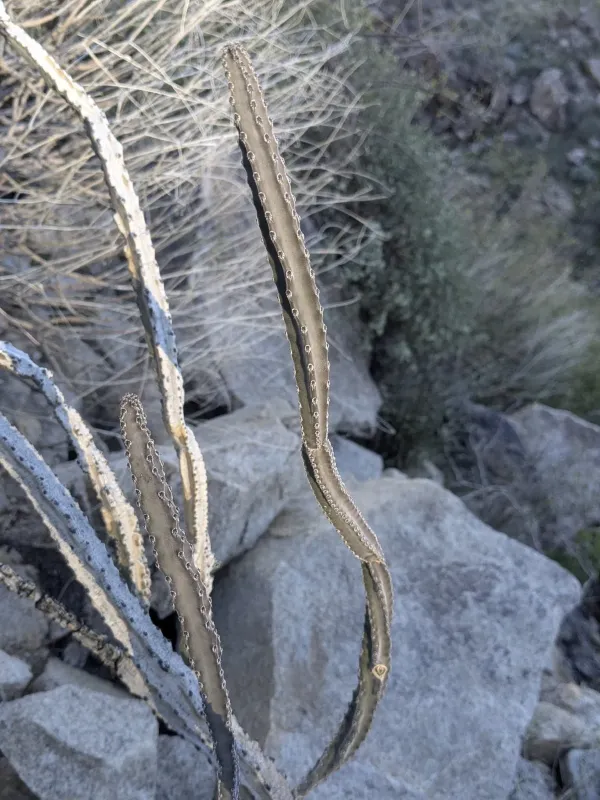
Description
Sowing dates
Propagation of Peniocereus greggii is primarily achieved through seeds, as the plant's unique structure makes vegetative propagation difficult. Seeds are sown in a well-draining, sandy substrate during the spring season when temperatures are warm.
Optimal germination requires consistent temperatures between 25 and 30 degrees Celsius. It is crucial to maintain a balance of humidity and ventilation during the early stages to prevent the delicate seedlings from damping off.
The growth rate of Peniocereus greggii is notably slow, requiring significant patience from the grower. Seedlings should remain in a protected environment for several months before being considered for transplanting.
Care must be taken when transferring young plants to ensure the developing tuberous roots are not damaged. A larger, deeper pot is recommended even for young specimens to accommodate the root system.
Professional agronomists suggest using a sterile mineral-based medium for sowing to minimize the risk of soil-borne diseases that could kill nascent seedlings within days.
Growing requirements
Peniocereus greggii, a member of the Cactaceae family, is native to the arid desert regions of the Southwestern United States and Northern Mexico. It is a highly specialized plant that thrives in rocky, nutrient-poor soil.
The plant demands intense sunlight for the majority of the day to maintain its structural integrity. In cultivation, it requires a location with maximum sun exposure and excellent air circulation to mirror its natural habitat.
Irrigation must be strictly managed; the soil must be allowed to dry out completely between waterings. During the winter dormancy phase, the plant requires almost no water and cooler temperatures to prepare for the growing season.
The soil mix must be exceptionally porous, typically consisting of volcanic rock, coarse sand, and a small portion of sandy loam. This allows for rapid water drainage and protects the sensitive tuber from rot.
While the cactus can endure heat, it is sensitive to prolonged frost combined with humidity. In greenhouse conditions, ensuring a sharp contrast between day and night temperatures can stimulate more robust growth.
Main diseases and pests
The most severe threat to Peniocereus greggii is rot, triggered by overwatering or poor soil drainage. Once the large underground tuberous root begins to decay, the entire plant is often beyond recovery.
Pests such as mealybugs and spider mites are common concerns for this species. Mealybugs often hide in the crevices of the stems, making them difficult to detect until an infestation is well established.
In wild-simulated outdoor cultivation, small rodents can pose a significant threat by digging up the succulent tuber. Physical barriers or wire mesh are often used to protect the root zone of vulnerable specimens.
Fungal infections are common if the plants are kept in stagnant, humid environments. Maintaining proper airflow is the most effective preventative measure against such outbreaks.
When applying pesticides or fungicides, growers must be cautious, as the tissues of desert cacti can be sensitive to certain chemical compounds found in commercial products.