
Paulownia catalpifolia hybrid
Paulownia catalpifolia x Paulownia fortunei
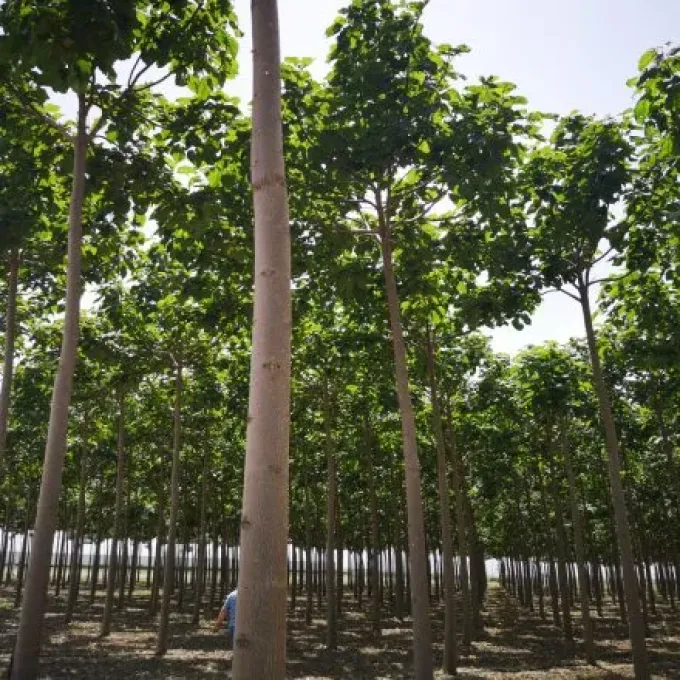
Description
Sowing dates
The Paulownia catalpifolia hybrid (Paulownia catalpifolia x fortunei) is a thermophilic woody crop; therefore, transplanting seedlings into the open field should only occur after the risk of late spring frosts has passed.
The optimal planting window is late May or early June, when the soil temperature at root depth reaches at least 15 degrees Celsius.
In regions with long springs, it is highly recommended to use greenhouse conditions for initial hardening and growth to ensure the plants are strong enough for field conditions.
Maintaining adequate soil moisture during the first few weeks after field transplantation is critical to establishing a healthy root system and preventing seedling shock.
Autumn planting is generally avoided in most temperate zones, as the young and developing root system may not survive the onset of harsh winter temperatures.
Growing requirements
As a member of the Paulowniaceae family, this hybrid requires open, sunny locations protected from strong, prevailing winds to achieve straight trunk development.
The crop thrives in deep, well-drained sandy loam or light loam soils with a neutral to slightly acidic pH level, typically ranging between 6.0 and 7.5.
This tree is highly water-demanding during its active growth phase, making the installation of a drip irrigation system a mandatory requirement for successful cultivation.
Cultivation in waterlogged or high-groundwater areas is strictly discouraged, as it leads to root rot and significant stunting of young tree growth.
To maximize biomass production, regular nitrogen fertilization during the summer, followed by potassium-phosphorus applications, is essential for healthy plant development.
Yield
The Paulownia catalpifolia hybrid is highly valued for its exceptional wood growth rate, which can reach several centimeters in stem diameter within a single season.
Under intensive management and proper care, the trees can reach harvestable sizes suitable for high-quality industrial timber production within 6 to 8 years.
Economic usage of the wood includes the manufacturing of lightweight furniture, construction materials, plywood, musical instruments, and sports equipment.
The tree demonstrates excellent regeneration capabilities, allowing for several timber harvest cycles from the same root system following the initial technical cut.
Beyond its timber value, the large leaves of the Paulownia hybrid can be utilized as high-protein livestock feed or as a nutrient-rich mulch for soil improvement.
Main diseases and pests
The most significant threat to young plantations is the presence of white grubs (larvae of the May beetle), which can damage the roots and impede the development of the seedlings.
In environments with high humidity and poor air circulation, powdery mildew can emerge, necessitating preventive measures and the application of fungicides.
Other potential pests include scale insects and spider mites, which may colonize the foliage during prolonged dry periods, thereby reducing the photosynthetic efficiency of the plant.
Rodents may cause damage to the bark of young trees during winter, making the use of protective netting or animal repellents a necessary security measure.
To minimize disease and pest risks, it is advised to maintain appropriate spacing between trees to ensure adequate airflow throughout the plantation.
Harvesting
Timber harvesting is conducted during the plant's dormant season, typically in late autumn or early spring, when the sap flow is at its lowest level.
The process involves cutting the trunk approximately 10–15 centimeters above the ground, allowing the stump to sprout for the next growth cycle.
After felling, the timber is carefully sorted by diameter and quality before being transported to wood-processing facilities for manufacturing purposes.
Extreme care must be taken during the harvest to avoid damaging the root collar, as this is essential for the successful regeneration of the tree in the following season.
The harvesting operation requires professional machinery and skilled labor to ensure precise cuts and the overall longevity of the plantation.