
Pandanus veitchii
Pandanus veitchii
Description
Growing requirements
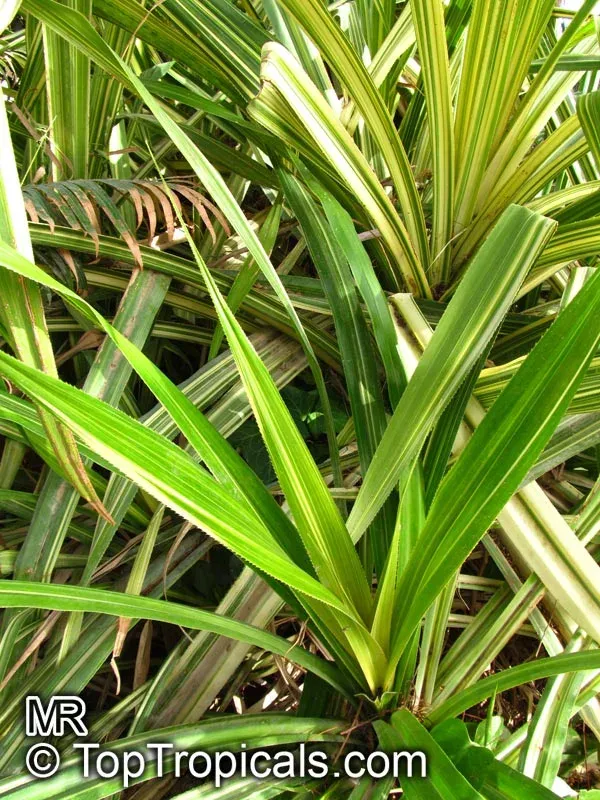
Pandanus veitchii is a prominent ornamental species within the Pandanaceae family. Originating from the tropical islands of the South Pacific, this plant is characterized by its dramatic, variegated sword-shaped leaves and its habit of developing aerial roots that support its growth as a shrub.
The plant thrives in warm tropical climates, requiring consistent temperatures between 20°C and 25°C. Exposure to sudden drops in temperature or cold drafts should be strictly avoided, as the species is highly sensitive to thermal stress which can hinder its physiological processes.
Bright, indirect light is essential for maintaining the distinct white stripes on the leaves. While the plant can tolerate some morning sun, intense midday exposure should be mitigated using light curtains to prevent chlorophyll damage and leaf scorching.
Soil requirements focus on high aeration and moisture retention without stagnation. A mixture of peat-based potting soil, perlite, and coarse sand provides an ideal structure that allows oxygen to reach the roots while maintaining necessary humidity levels.
Consistent moisture management is vital for healthy development. The soil should be kept lightly moist during the active growing season, but never waterlogged. It is crucial to ensure that water does not pool in the leaf axils, as this promotes bacterial growth.
Main diseases and pests
Mealybugs are a significant threat to Pandanus veitchii, frequently nesting in the dense leaf bases. These insects weaken the plant by extracting sap and producing honeydew, which encourages the growth of sooty mold on the foliage surface.
Root rot, caused by various species of Phytophthora or Pythium, remains the most common disease in cultivation. It is almost exclusively triggered by poor drainage or overwatering, resulting in wilting leaves and a soft, dark-colored base.
Spider mites frequently attack the foliage when indoor humidity drops below 40% during the heating season. These pests cause a characteristic stippling effect and webbing between the leaf margins, significantly reducing the plant's aesthetic value.
Scale insects can attach to the underside of the leaves or along the stem, appearing as small brown bumps. If left untreated, they multiply rapidly, leading to yellowing of the leaf tissue and eventual defoliation of the lower tiers.
To maintain plant health, regular inspections of the leaf axils are recommended. If pests are identified, mechanical removal combined with horticultural soaps or systemic insecticides is necessary to stop the infestation before it compromises the core of the plant.