
Forest screw pine
Pandanus sylvestris
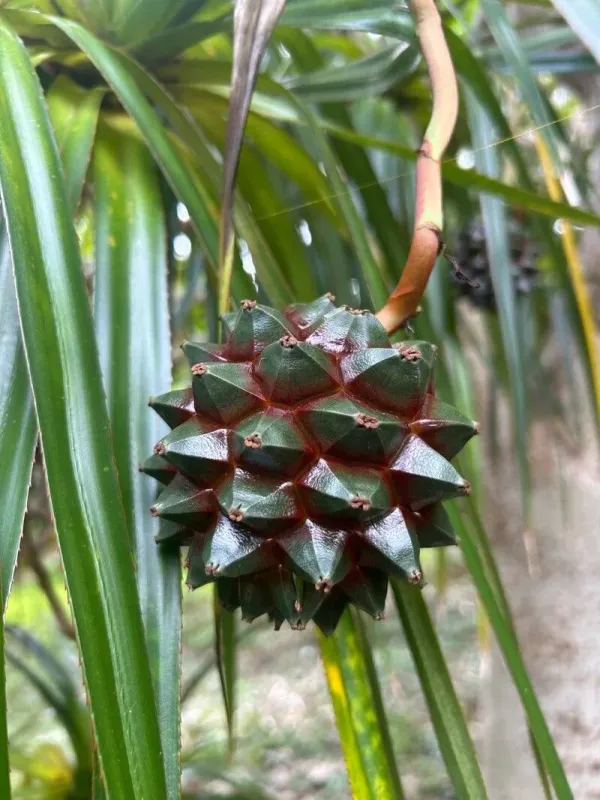
Description
Growing requirements
Forest screw pine (Pandanus sylvestris) belongs to the Pandanaceae family. It is a robust tropical plant characterized by stilt roots that provide structural support in various soil conditions, reflecting its evolution in humid environments.
The species is native to tropical islands, thriving in environments with consistent rainfall and warm temperatures. In agricultural settings, it requires a controlled microclimate to simulate its natural habitat for optimal leaf production.
Soil requirements involve well-drained but fertile media, preferably rich in organic matter. Proper aeration is critical, as the roots are highly susceptible to damage if the soil remains waterlogged for extended periods.
The crop requires bright, filtered light to maintain its structural integrity and leaf quality. While it tolerates partial shade, excessive darkness results in etiolated growth that makes the fiber brittle and unsuitable for industrial use.
Economically, Pandanus sylvestris is valued for its fibrous leaves. These are processed into high-quality mats, baskets, and cordage. The plant's ability to stabilize coastal soils also makes it an important component of land conservation.
Main diseases and pests
The most common pests include mealybugs and scale insects, which cluster at the base of the leaves. Systematic monitoring and the application of horticultural oils or insecticides are necessary to maintain plantation health.
Root rot, caused by various species of fungi, is a frequent issue in nurseries or poorly drained fields. It leads to the rapid decline of the plant, often preceded by yellowing of the lower foliage.
Spider mites represent a significant threat during periods of low humidity. The infestation can be identified by fine webbing on the undersides of leaves and speckling, which significantly affects the photosynthetic capacity.
Leaf spot diseases, induced by bacterial or fungal pathogens, occur when ambient humidity is high and airflow is restricted. Pruning infected tissue and applying copper-based fungicides are standard control practices.
Effective pest management relies on a combination of cultural practices and early intervention. Maintaining optimal spacing between plants ensures adequate ventilation and reduces the likelihood of widespread disease outbreaks.