
Pandanus spiralis
Pandanus spiralis
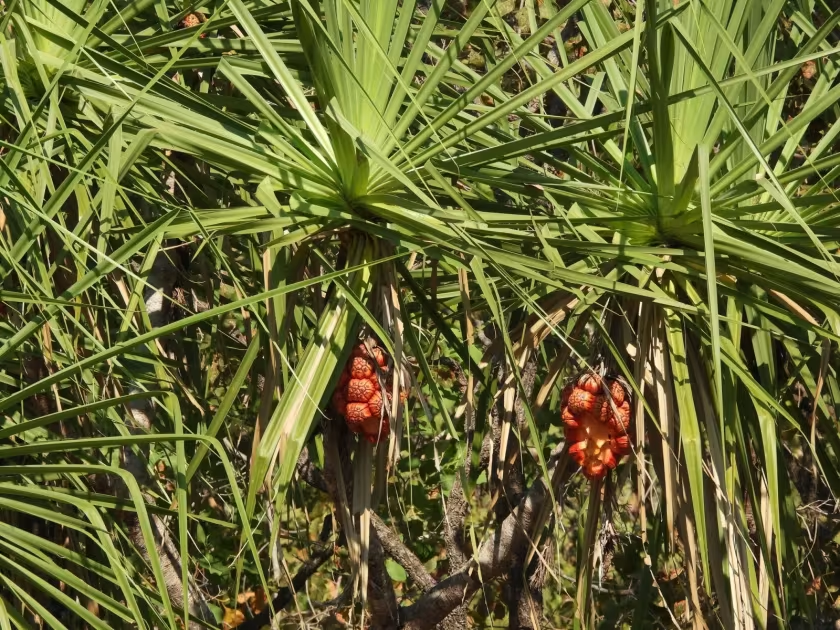
Description
Growing requirements
Pandanus spiralis, commonly known as the common screw pine, is a member of the Pandanaceae family. Native to Northern Australia, this plant is well-adapted to tropical coastal habitats, where it plays a significant ecological role in soil stabilization.
The plant is botanically recognized by its stilt-like aerial roots and spiral arrangement of leaves. These features are essential for the plant's survival in saline, sandy soils where structural support is critical against strong coastal winds.
Successful cultivation requires high humidity, ample sunlight, and well-draining soil. It is highly intolerant of frost, necessitating climate-controlled greenhouse environments if grown outside its native tropical range to ensure sustained growth.
Agronomic practices focus on maintaining soil moisture levels while avoiding waterlogging, which can be fatal to the root system. Periodic fertilization with micronutrients helps maintain the health and vigor of the long, fibrous leaves throughout the growing season.
The economic utilization of Pandanus spiralis is primarily centered on its strong, resilient leaves. These are harvested and processed to create traditional handicrafts, such as mats, baskets, and nets, due to the high fiber content that offers excellent durability.
Main diseases and pests
The primary threats to the plant include fungal pathogens that thrive in excessively humid and poorly ventilated conditions, leading to root rot. Scale insects and mealybugs are the most common pests that frequently infest the leaf axils.
Effective management includes maintaining clean growing areas and applying systemic pesticides when pest populations exceed economic injury levels. Pruning dead or diseased foliage is also vital for preventing the spread of mold and ensuring adequate airflow.