
Pygmy screw pine
Pandanus pygmaeus
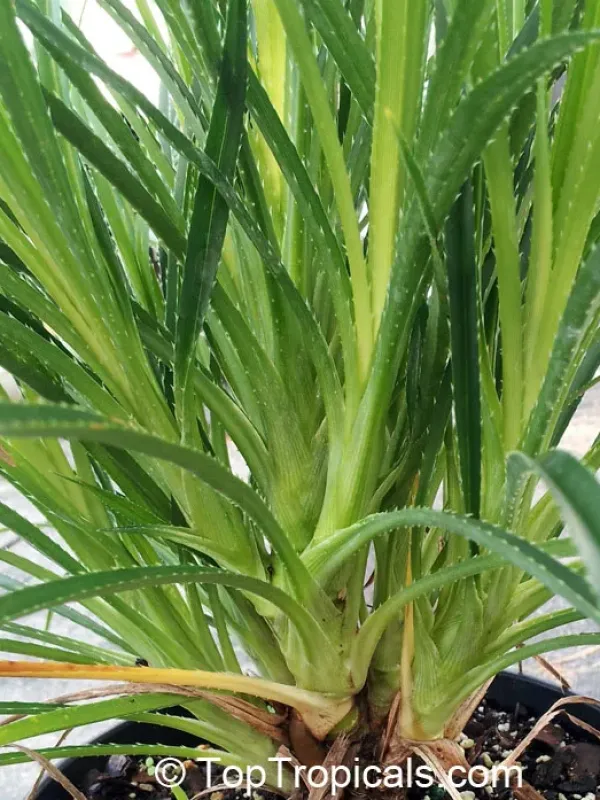
Description
Growing requirements
The Pygmy screw pine (Pandanus pygmaeus) belongs to the Pandanaceae family. It is a compact tropical species native to the regions of Southeast Asia, thriving in warm and humid environments where it naturally grows as an understory or coastal plant.
In cultivation, this species requires a stable temperature range between 20–25°C. It is particularly sensitive to cold drafts and rapid temperature fluctuations, which can trigger leaf stress and inhibit the plant's natural growth rate, requiring controlled environments.
Light requirements are centered on bright, indirect sunlight. While the plant can tolerate some morning sun, intense afternoon exposure frequently leads to leaf scorching. In commercial production, shade cloths are recommended to maintain the deep green color of the foliage.
The substrate must be porous and well-draining, consisting of a mix of loam, leaf mold, and coarse sand. Maintaining the soil structure is essential, as waterlogged conditions in the root zone quickly lead to hypoxia and subsequent necrosis of the root system.
Watering practices should be consistent, ensuring the substrate remains evenly moist without being saturated. High relative humidity is a critical factor; therefore, regular misting or automated humidification systems are necessary to prevent the leaf tips from drying out.
Main diseases and pests
Root rot is the primary physiological threat caused by over-irrigation and poor drainage. Once pathogenic fungi penetrate the root system, the plant quickly loses vigor, necessitating immediate transplanting into sterile, fresh growing media to salvage the specimen.
Scale insects are a persistent problem in professional nurseries. They attach themselves firmly to the undersides of leaves and stems, sucking the sap and leaving behind honeydew, which often encourages the growth of sooty mold on the foliage surface.
Spider mites represent a major challenge in dry indoor conditions. These pests thrive in low humidity, rapidly colonizing the plant and causing mottled yellowing of the leaves. Frequent monitoring and timely application of acaricides are required to maintain health.
Mealybugs tend to hide in the axils of the leaves, protected by their waxy secretions. Because they are difficult to reach with standard contact sprays, systemic insecticides are the most effective method for eradicating these pests from the dense plant structure.
Preventative maintenance includes keeping the plant debris clean and ensuring proper air circulation within the growing area. Regular inspections are mandatory, especially before moving plants between zones, to prevent the spread of invasive pests.