
Pandanus labyrinthicus
Pandanus labyrinthicus
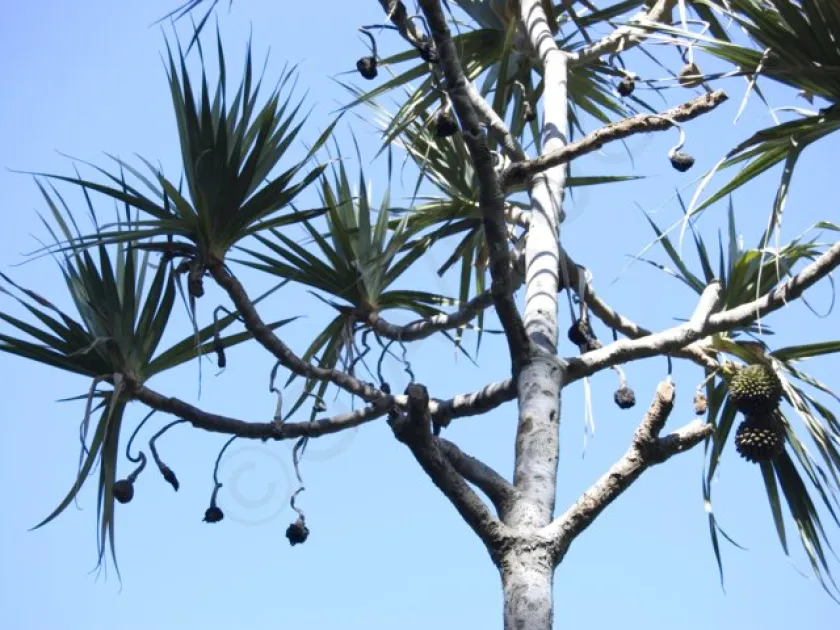
Description
Sowing dates
Pandanus labyrinthicus, a member of the Pandanaceae family, is a tropical tree-like plant known for its structural utility. Propagation is typically achieved through seeds or vegetative offsets, with vegetative propagation being preferred for commercial uniform yields.
Seeds must be sown immediately after maturation as their viability decreases rapidly. For large-scale plantations, the use of side shoots (suckers) is standard practice; these are separated from the parent plant once they develop their own root initials to ensure high survival rates.
Planting density is determined by the specific land conditions, typically allowing ample space for the development of characteristic prop roots. These roots are vital for the plant's stability and must be given enough room to anchor effectively in the soil.
Nursery stages require a controlled environment with high humidity and consistent warmth. Young seedlings are transplanted into the field once they reach a height of approximately 30–40 cm, ensuring they are robust enough to withstand outdoor climatic fluctuations.
Successful establishment depends on careful initial irrigation. The root zone must be kept moist, but not waterlogged, during the first few months post-transplant to prevent root rot and ensure the development of a healthy vascular system.
Growing requirements
This species thrives in tropical climates where the temperature remains between 24 and 28 degrees Celsius. It is highly sensitive to cold and will suffer irreversible damage if exposed to temperatures dropping below 15 degrees Celsius.
The ideal soil for Pandanus labyrinthicus is a well-draining, fertile loam. While the plant loves humidity, it requires soils that prevent water stagnation, as the root system is prone to decay if kept in anaerobic, saturated conditions for prolonged periods.
High levels of indirect sunlight are necessary for photosynthesis and the formation of strong, fibrous leaves. Excessive shade can lead to stunted growth, while direct, intense sunlight in arid areas can scorch the foliage.
A balanced fertilizer application, rich in nitrogen and organic matter, is recommended during the peak growing season to support the formation of long, strong leaves used in fiber production. Micronutrient levels should be monitored to prevent chlorosis.
Cultural maintenance involves routine weeding within the plantation rows. Since the plant has a shallow but wide-spreading root system, heavy mechanical cultivation should be avoided near the base to prevent physical damage to the roots.
Main diseases and pests
Common pests include scale insects and spider mites, which congregate on the underside of the leaves or in the tight leaf bases. These pests can drastically reduce the fiber quality by causing tissue damage and nutrient depletion.
Fungal diseases, specifically leaf spot and anthracnose, are significant risks in humid, low-ventilation environments. Implementing proper spacing between plants is the most effective cultural method to mitigate the spread of these pathogens.
Bacterial pathogens can enter through harvest wounds or mechanical damage. Disinfecting harvesting knives between plants is a crucial sanitary practice that prevents the rapid spread of infections throughout the plantation.
Root rot, caused by poor soil drainage or excessive irrigation, remains the primary cause of mortality. Improving the drainage profile of the plantation soil is essential for long-term health and disease management.
Regular plantation hygiene, including the removal of dead leaf matter from the base of the plant, prevents the accumulation of detritus where pests and fungi thrive, significantly lowering the pressure of infectious diseases.
Harvesting
Pandanus labyrinthicus is primarily harvested for its high-quality fiber, which is extracted from the leaves. Mature leaves are harvested by hand, with care taken to avoid damaging the terminal bud or the trunk, allowing for multiple harvests over many years.
Post-harvest processing involves stripping the edges of the leaves, which are typically lined with sharp spines. The leaves are then dried or boiled to extract the tough, flexible fibers used in weaving mats, baskets, and traditional textiles.
Sustainable harvest schedules are essential to maintain the health of the plant. Over-harvesting leads to a decline in fiber quality and increases the plant's susceptibility to diseases and pests, potentially shortening its productive lifespan.
The fruit of the plant is less commercially significant but serves as a secondary byproduct. It can be used locally in some regions, but the economic focus remains almost exclusively on the leaves and the structural integrity of the plant itself.
Proper storage of the harvested leaves is critical to prevent fungal contamination before processing. Keeping the harvested material in a dry, ventilated area ensures the fiber retains its strength and durability for end-product manufacturing.