
Ozothamnus rosmarinifolius
Ozothamnus rosmarinifolius
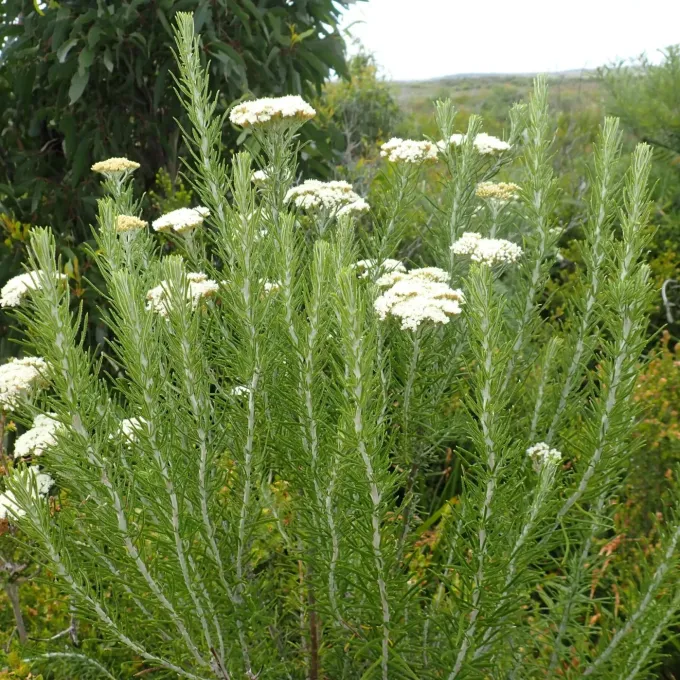
Description
Sowing dates
Sowing seeds of Ozothamnus rosmarinifolius should be done in late winter or early spring in a greenhouse or controlled environment. For successful germination, seeds require stratification at low temperatures for several weeks.
The growing medium must be light, sandy, and possess excellent drainage capabilities. Seeds are sown on the surface and lightly covered with vermiculite to maintain essential surface moisture.
A temperature range of 15–18 degrees Celsius should be maintained during the germination period. It is vital to ensure consistent moisture without waterlogging, which is critical to avoid seedling damping-off.
Seedlings are pricked out into individual pots once the first true leaves emerge. Gradual hardening-off of the young plants to outdoor conditions should begin only after the threat of frost has passed.
In regions with mild climates, propagation via semi-hardwood cuttings taken in summer is a reliable method. This ensures that the vegetative offspring retain the characteristics of the parent plant.
Growing requirements
Ozothamnus rosmarinifolius prefers sunny locations with optimal air circulation. The species is sensitive to strong winds, so planting in areas protected from drafts is highly recommended.
Soil requirements focus on high aeration and drainage properties. The plant struggles significantly in heavy clay soils that are prone to water stagnation around the root zone.
The ideal soil pH is slightly acidic to neutral. If fertilization is necessary, it is best to select low-phosphorus blends, as the plant is sensitive to an excess of mineral nutrients.
This shrub belongs to hardiness zones 8–9 and requires winter protection when temperatures drop below minus 5–7 degrees Celsius. In temperate regions, it is frequently cultivated as a container plant.
Irrigation should be moderate, allowing the top layer of soil to dry out between waterings. Excessive soil moisture during the dormant winter period is often fatal to the root system.
Main diseases and pests
Root rot, primarily caused by waterlogged soil, is the main threat to the health of this species. Persistent moisture promotes the growth of pathogenic fungi that destroy the plant's root system.
In greenhouses, the plant may be susceptible to spider mites and mealybugs. Regular monitoring of the underside of leaves allows for early detection and targeted management of these pests.
Powdery mildew occurs occasionally, typically in conditions with poor airflow. It is managed using systemic fungicides specifically approved for use on ornamental shrubs.
Incorrect soil pH can lead to iron chlorosis, which manifests as yellowing of the foliage. This condition is treated by applying chelated micronutrients and adjusting the acidity of the substrate.
Aphids may attack succulent new growth during the active growing season. In such instances, insecticidal soaps or gentle systemic insecticides are recommended to minimize damage to delicate tissues.
Harvesting
The primary use of Ozothamnus rosmarinifolius is in the floral industry, where its decorative flower clusters are highly valued. Harvesting is typically done at the tight bud or semi-open stage.
To preserve quality, the flower stems are hung upside down in a dark, well-ventilated area for drying. The dried inflorescences maintain their shape and color exceptionally well in decorative arrangements.
The harvesting window lasts from mid-summer through autumn, depending on the plant's growth rate. Regular pruning encourages denser branching and increases the number of stems in the following season.
When harvesting, it is crucial to leave enough green foliage for the plant to recover and photosynthesize. Removing too much vegetative mass can weaken the shrub and lead to long-term decline.
Harvesting tools should be sharp and sanitized to ensure a clean cut. Proper hygiene prevents the introduction of pathogens into the vascular tissues of the shrub.