
Ozothamnus hookeri
Ozothamnus hookeri
Description
Growing requirements
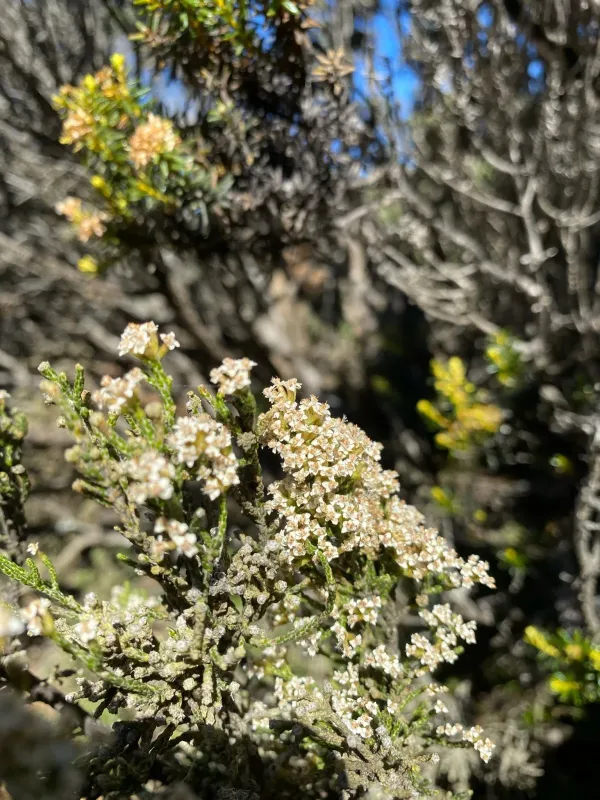
Ozothamnus hookeri, commonly known as the Kerosene bush, is an evergreen shrub belonging to the Asteraceae family. It is native to the alpine and sub-alpine regions of Tasmania and Australia, where it thrives in rocky terrain.
The plant features distinct scale-like foliage that gives it a unique, needle-like appearance. Its most notable botanical feature is the clusters of small, white or creamy flower buds that resemble tiny pearls, appearing in the late spring or early summer.
To cultivate Ozothamnus hookeri successfully, it is essential to provide well-draining, acidic, and gritty soil. The species is highly intolerant of waterlogged soil, which rapidly leads to root rot.
Climatically, it prefers cooler temperatures and moist conditions. While it enjoys a position in full sun, it can tolerate partial shade, especially in warmer climates where protection from the midday sun is beneficial.
Propagation is typically performed via semi-hardwood cuttings taken during the growing season. Using a well-aerated rooting medium and maintaining humidity is critical for achieving high success rates during the establishment phase.
Main diseases and pests
Root rot caused by Phytophthora or other soil-borne fungi is the most significant threat to this crop. Maintaining excellent drainage and avoiding over-irrigation are the primary defensive measures.
Insect pests, such as aphids and spider mites, may infest the foliage, particularly in greenhouse environments. Integrated pest management strategies are recommended to keep populations below economic thresholds.
Nutritional stress often manifests as chlorosis, especially if the soil pH rises above the optimal range for this acid-loving species. Regular soil testing is advised to ensure proper acidity.
Extreme winter conditions can lead to foliage damage or plant mortality. In cold-climate nurseries, protective winter coverings or moving containerized plants to frost-free areas is necessary.
Overall, Ozothamnus hookeri is considered a hardy plant when given the appropriate environment. Avoiding overcrowding and ensuring adequate air circulation are fundamental to preventing widespread pathogen outbreaks.
Harvesting
The commercial use of Ozothamnus hookeri is primarily centered on the floriculture industry. The branches, with their unique bud formations, are highly prized as fillers in professional floral arrangements.
Harvesting is typically timed when the flower buds are fully developed but before they have fully opened to show their petals. This ensures the longest possible vase life and aesthetic appeal for wholesalers and florists.
In landscaping, the plant is used for rockeries, Mediterranean-style gardens, or as a structural element in shrub borders. Its compact, tidy growth habit makes it an excellent choice for low-maintenance garden design.
Post-harvest care involves pruning the shrubs to maintain their shape and density. Regular, light pruning encourages the plant to produce more flowering shoots for the following season.
Marketing this crop involves targeting specialized florists who seek unique textures. The quality of the harvested stems depends heavily on consistent moisture and the lack of mechanical damage during growth.