
Kerosene bush
Ozothamnus ledifolius
Description
Growing requirements
The Kerosene bush (Ozothamnus ledifolius) is an evergreen shrub belonging to the Asteraceae family. Native to the alpine regions of Tasmania, this plant is well-adapted to cool, breezy environments and is highly valued in horticulture for its distinct, aromatic foliage.
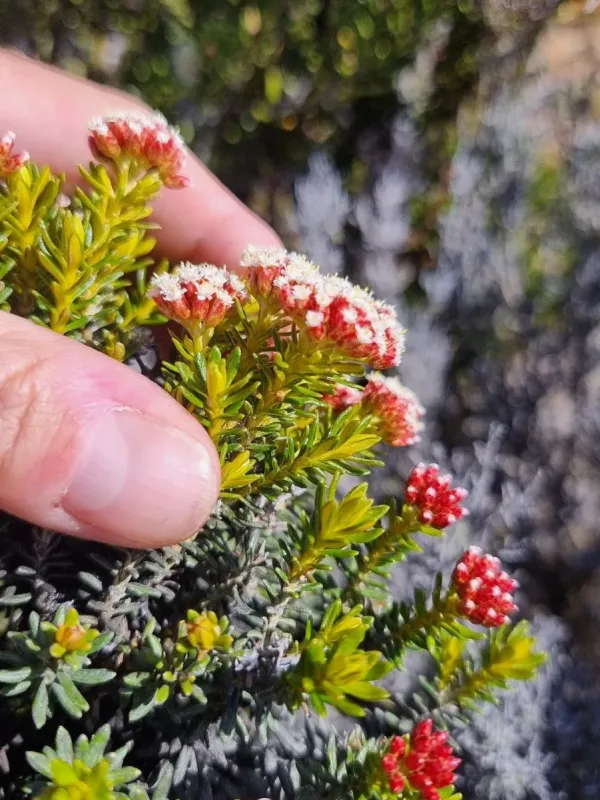
Botanically, the plant is characterized by its linear leaves which are covered in a dense, woolly tomentum on the underside. This specialized feature acts as a protective layer, reducing water loss and protecting the plant from the harsh, desiccating winds of its natural mountainous habitat.
Successful cultivation requires well-draining soil that is acidic to neutral in pH. The plant is notoriously intolerant of waterlogged conditions, making high-quality drainage systems essential, especially in clay-heavy garden soils where root rot can occur rapidly.
Ideally, this species thrives in full sun, though it appreciates some shelter from the hottest afternoon sun in warmer temperate zones. It is generally hardy, though it requires protection from severe, prolonged frosts and exposure to drying, freezing winds during the winter months.
The cultural care involves minimal fertilization, as the plant is naturally adapted to nutrient-poor soils. Pruning should be performed lightly after the flowering period to maintain a dense, compact habit and encourage new growth for the following season.
Main diseases and pests
Root rot, primarily caused by species of Phytophthora, remains the most significant threat to the Kerosene bush. This condition is almost always a result of poor soil aeration or excessive irrigation, emphasizing the need for proper site selection and soil preparation.
Pest issues such as spider mites and scale insects can occasionally affect the plant, particularly in sheltered or dry indoor greenhouse environments. Early intervention using horticultural oils or systemic insecticides is recommended to prevent significant damage to the foliage and stunted growth.