
Net-veined adder's-tongue
Ophioglossum reticulatum
Description
Growing requirements
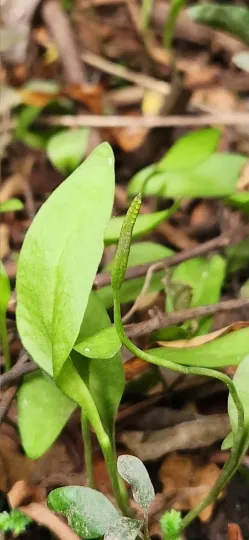
The net-veined adder's-tongue (Ophioglossum reticulatum) belongs to the Ophioglossaceae family. Unlike typical ferns, this species is characterized by a single leaf divided into a sterile lamina and a fertile spike, which is a unique evolutionary adaptation.
Native to tropical and subtropical regions across the Americas, Africa, and Asia, this plant thrives in humid environments. It typically inhabits moist meadows and the understory of tropical forests, requiring high ambient humidity to complete its life cycle.
Successful cultivation requires stable temperatures between 20°C and 28°C. The species is highly sensitive to intense direct sunlight, which can cause leaf scorch; therefore, shading or indirect light conditions are essential for maintaining plant health.
The substrate must be well-draining, rich in organic matter, and slightly acidic. A mix consisting of sphagnum peat, leaf mold, and perlite or sand is recommended to provide the necessary aeration and moisture retention without causing root rot.
In terms of agricultural use, this fern is primarily studied for its potential medicinal properties. Extracts derived from its tissues contain bioactive compounds that have been traditionally utilized for their anti-inflammatory and healing properties in various regional cultures.
Main diseases and pests
Fungal infections are the most significant threat to the net-veined adder's-tongue, particularly in greenhouse conditions. Poor ventilation combined with high moisture levels often leads to rhizome decay, which is difficult to reverse once established.
Gastropod pests, including slugs and snails, pose a constant threat to the foliage. They can quickly consume the succulent leaf tissue, leading to significant yield loss in nursery production and necessitating regular monitoring and physical barriers.
Mite infestations can occur when the humidity levels drop below optimal values. These pests damage the vascular system of the leaf, hindering the photosynthesis process and weakening the plant's overall structural integrity over time.
Nutrient imbalances resulting from incorrect fertilization can cause chlorosis. Since the plant has specialized root systems, it is sensitive to high concentrations of mineral salts, which can lead to root tip necrosis if not properly managed.
Inadequate airflow in confined spaces promotes the spread of leaf spot diseases. Implementing a rotation schedule for plants and ensuring consistent air circulation are critical practices to mitigate the risk of pathogen outbreaks during the growth phase.