
Portuguese adder's-tongue
Ophioglossum lusitanicum
Description
Growing requirements
The Portuguese adder's-tongue is a small, perennial fern belonging to the Ophioglossaceae family. While not an agricultural crop, it is a significant plant for botanical conservation and ecological research within its natural range.
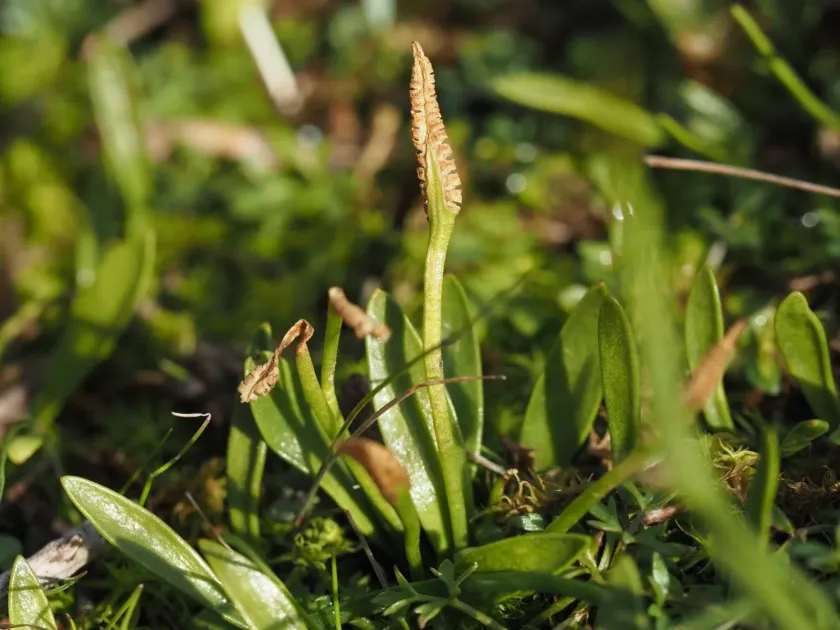
The plant is anatomically unique, featuring a single, simple leaf that bifurcates into a sterile vegetative blade and a fertile, spike-like structure. This minimalist structure makes it highly distinct from larger, common fern varieties.
This species thrives in open, sunny habitats with sandy or silty soils that maintain seasonal moisture. It is most commonly found in Mediterranean or Atlantic-influenced climates where it can avoid extreme summer heat and harsh winter frosts.
Regarding its habitat, it requires environments with minimal competition from taller grasses. It is often found in depressions or along coastal zones where water accumulates during the rainy season.
As a highly sensitive species, it cannot withstand soil cultivation, fertilizers, or heavy machinery. Preservation efforts are strictly focused on maintaining untouched, natural coastal or lowland pastures.
Main diseases and pests
Major threats to Ophioglossum lusitanicum include coastal development, intensive agricultural practices, and overgrazing, all of which disrupt the delicate soil crust and surface hydrology necessary for its survival.
Fungal diseases can affect the plant if soil drainage is compromised, leading to root rot. High humidity levels combined with poor aeration can exacerbate these physiological stresses.
Pests such as gastropods (snails and slugs) pose a significant threat to the vegetative parts of the plant, as their feeding can be particularly destructive to the single-leaf structure.
Climate change, specifically the increasing frequency of prolonged droughts during the growing season, threatens the viability of spores and the development of the prothallium.
Due to its rarity, the species requires strict adherence to conservation guidelines. Any contamination of its habitat with agricultural chemicals or runoff is strictly detrimental to its growth cycles.