
Adder's-tongue fern
Ophioglossum pedunculosum
Description
Growing requirements
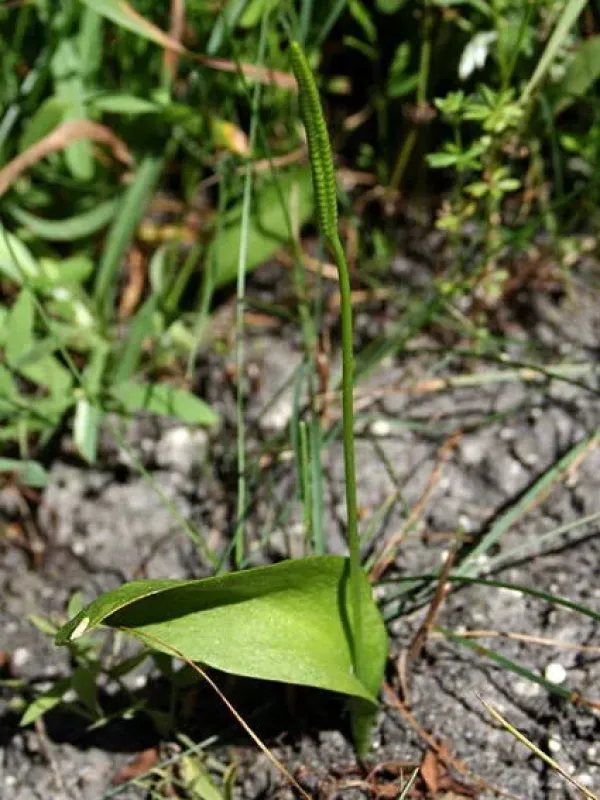
The adder's-tongue fern (Ophioglossum pedunculosum) is a small, specialized perennial plant belonging to the Ophioglossaceae family. Unlike common ferns, this species is characterized by a singular, undivided leaf and a distinct fertile spike that emerges on a long, slender stalk.
This fern is native to humid, temperate, and tropical habitats, where it thrives in the dappled light of forest floors or along the edges of marshy meadows. Its geographic range is limited to regions with stable annual precipitation and mild temperature fluctuations.
Cultivation requires specific soil conditions, ideally a loamy mix rich in decaying organic matter with a slightly acidic pH. Consistent moisture is the most critical factor; the substrate must be kept moist at all times, as the plant lacks the ability to withstand prolonged dry spells.
The species requires a shaded microclimate to simulate its natural understory environment. Exposure to direct sunlight will rapidly cause the foliage to desiccate, leading to the collapse of the plant's metabolic functions during the peak growing season.
While not a traditional agricultural crop, the interest in Ophioglossum pedunculosum lies in its unique evolutionary history and its potential for specialized ornamental or botanical research. Its propagation is generally achieved through controlled cultivation in greenhouse settings that allow for precise environmental monitoring.
Main diseases and pests
Environmental degradation, particularly the drainage of wetlands and the destruction of natural forest habitats, remains the primary threat to the wild populations of Ophioglossum pedunculosum. Habitat fragmentation prevents the effective dispersal of spores and limits genetic diversity.
Fungal infections, such as root rot or leaf spots, pose a significant risk in greenhouse environments where air circulation is inadequate. High humidity is necessary for growth, but it also creates ideal conditions for pathogens to thrive on the delicate fern tissue.
Invertebrate pests, especially slugs and snails, are highly attracted to the succulent-like foliage of the adder's-tongue fern. In a cultivation environment, these pests can consume the entire leaf surface in a single night if not managed via physical barriers or traps.
The plant is highly sensitive to soil salinity and synthetic chemical runoff. Excessive fertilization can destroy the beneficial mycorrhizal fungi in the root zone, which are essential for the plant's nutrient uptake and overall survival.
Weed competition is a major obstacle during the initial establishment phase. As a small, slow-growing plant, Ophioglossum pedunculosum cannot compete with aggressive, rapidly growing weeds, which necessitate manual weeding and diligent maintenance by the grower.