
Serrated bayberry
Myrica serrata
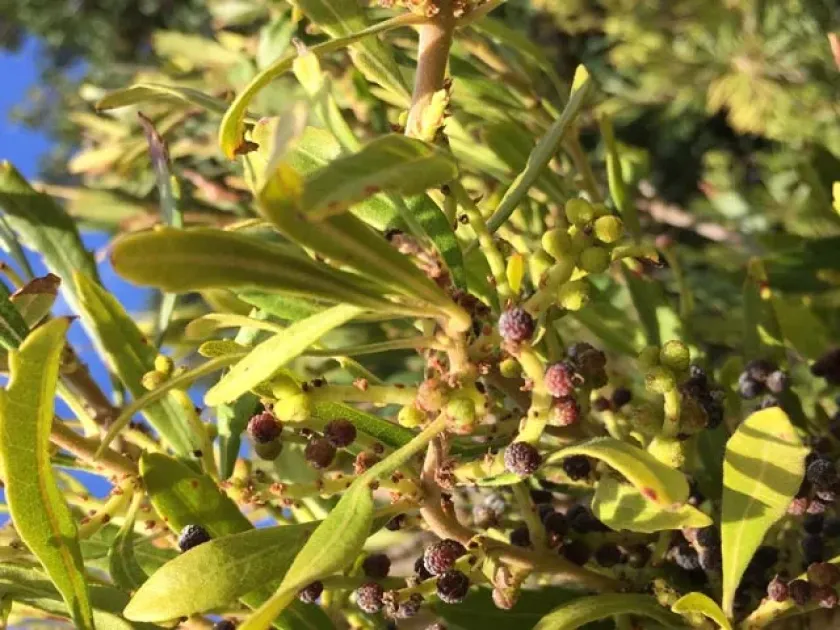
Description
Growing requirements
Serrated bayberry (Myrica serrata) is a woody perennial shrub or small tree belonging to the Myricaceae family. It is recognized by its distinctive evergreen foliage, which features serrated margins, and its capacity to thrive in diverse moist environments.
Native to Southern and Eastern Africa, this species typically inhabits riverbanks, wetlands, and margins of forests. Its natural habitat is characterized by high precipitation and consistent soil moisture, which dictates its specific environmental requirements in cultivation.
When cultivating Myrica serrata, it is essential to provide acidic soil that remains consistently moist. While it is tolerant of wet soil conditions, it requires adequate drainage to prevent root hypoxia. The plant is sensitive to frost and generally requires protection in cooler climates.
A key biological trait of the species is its ability to fix atmospheric nitrogen through a symbiotic relationship with Frankia actinobacteria. This process enhances soil fertility and allows the plant to flourish in nutrient-poor conditions, making it useful in soil reclamation.
Economically, the species is valued for its essential oils and wax-producing glands on the foliage and fruit. It is used in traditional medicine, fragrance production, and as an ornamental plant in landscaping due to its evergreen appearance and aromatic properties.
Main diseases and pests
The primary threats to Myrica serrata are root-borne fungal pathogens, often triggered by waterlogged conditions and poor air circulation in the root zone. Ensuring a healthy, porous growing medium is critical for disease prevention.
Pests such as aphids and scale insects are common adversaries in greenhouse environments. These pests thrive in dry air, so maintaining appropriate humidity levels and conducting regular phytosanitary inspections are necessary to keep the plants healthy.