
Southern bayberry
Myrica cerifera
Description
Sowing dates
Southern bayberry (Myrica cerifera) is typically propagated through seeds or cuttings. Seeds require cold stratification for at least 60 days to break dormancy and ensure successful germination.
Sowing should be done in a well-draining, moist medium. The seeds are small and should be sown near the surface, covered with only a thin layer of soil to allow for sufficient light exposure.
Vegetative propagation via semi-hardwood cuttings is the preferred commercial method. Cuttings are taken in mid-summer and treated with rooting hormones before being placed in a misting propagation unit.
When transplanting to the field, seedlings should be spaced approximately 1.5 to 2.5 meters apart to provide adequate room for their extensive root systems to develop.
Proper irrigation during the establishment phase is critical. While the plant is hardy once established, young saplings need consistent moisture to prevent transplant shock and ensure healthy canopy growth.
Growing requirements
Myrica cerifera, a member of the Myricaceae family, is a versatile shrub that thrives in a variety of environments. It prefers full sun but demonstrates good tolerance for partial shade conditions.
One of the most significant biological features of this plant is its ability to fix nitrogen through a symbiotic relationship with Frankia bacteria in its roots. This allows it to thrive in nutrient-poor, sandy, or disturbed soils.
The shrub is highly adaptable to soil pH and salinity. It is often found in coastal regions, where its salt tolerance makes it a valuable plant for stabilizing dunes and protecting inland areas from sea spray.
Climatically, it is suited for warm temperate and subtropical zones. While it can withstand occasional frost, extreme cold may cause dieback in younger, unestablished specimens.
Maintenance involves regular pruning if a dense, hedge-like structure is desired. Because the plant responds well to shearing, it is frequently used in commercial landscaping to create functional, wind-breaking screens.
Yield
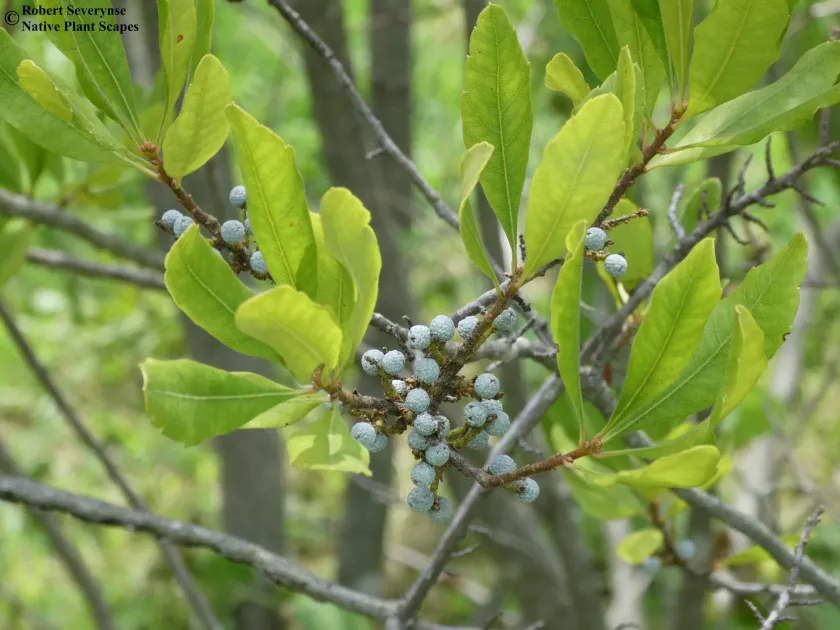
The economic yield of the Southern bayberry is primarily associated with the wax found on the surface of its small, greyish berries. This wax has historically been used to produce aromatic, eco-friendly candles.
Harvesting involves collecting the berries in late autumn once they have fully matured. The wax is extracted by boiling the berries in water, allowing the wax to melt, float to the surface, and solidify for collection.
Beyond wax production, the plant serves as a vital food source for diverse bird species, particularly during migration. This ecological function adds value to farms focusing on integrated pest management and biodiversity.
Plants generally begin to produce a harvestable amount of fruit within three to five years. Yield efficiency is maintained by selectively pruning out older, less productive stems every few seasons.
While not a large-scale agricultural crop, it remains a high-value plant for specialty nursery markets and artisanal producers of natural candles and soaps.
Main diseases and pests
Southern bayberry is remarkably resistant to most common plant diseases, making it a low-maintenance choice for sustainable agriculture. However, poor drainage is a primary risk factor for root rot.
Scale insects and aphids occasionally infest the foliage, especially in dense, poorly ventilated plantings. These pests can be managed with horticultural oils or insecticidal soaps if infestations become problematic.
Iron chlorosis may appear if the plant is grown in highly alkaline soils. This can be effectively corrected by incorporating sulfur or organic matter to lower the pH, or by applying chelated iron supplements.
Weed control is essential during the plant's first two years of growth. Because the root system is shallow, manual weeding is preferred over deep mechanical tilling, which could damage the roots.
In certain regions, deer may browse on the foliage, especially in winter. Using deer deterrents or physical fencing may be necessary in areas with high local wildlife populations to protect younger shrubs.